

Wrist and Elbow Pain in Pickleball: What You Need to Know to Stay on the Court
Why Pickleball Players Need to Know About Elbow Pain
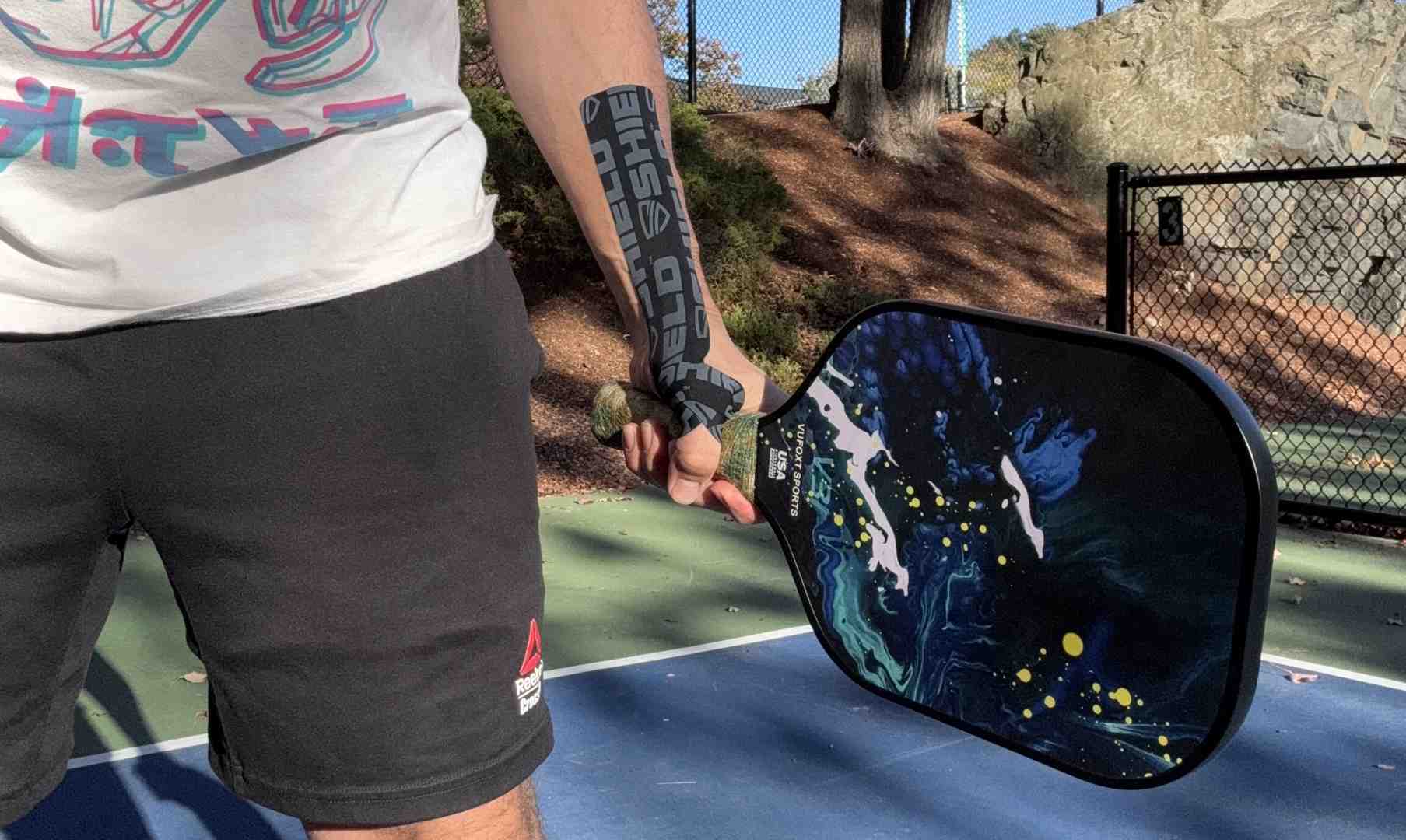
Elbow pain in pickleball, medically known as lateral epicondylitis or "pickleball elbow," is a common complaint affecting the tendons on the outside of the elbow. As the sport's popularity explodes, so do overuse injuries. If left untreated, this condition can sideline players for weeks or even months.
Wrist pain in pickleball is commonplace as well, and can come from chronic use and strain or acute injuries (impact on court, for example). Pickleball wrist pain commonly results from overuse, improper technique (like excessive wrist snapping), or a tight grip, leading to tendonitis, sprains, or TFCC injuries. Key remedies include applying the RICE method (Rest, Ice, Compression, Elevation), modifying the paddle grip or using supportive equipment such as tapes and wraps.
Quick Answer: What You Need to Know About Elbow and Wrist Pain in Pickleball
- What it is: Inflammation or micro-tears in the forearm tendons attached to the elbow or wrist, caused by repetitive paddle movements. For the wrist, it can also be anything from wrist arthritis, tendon irritation, joint instability, or triangular fibrocartilage (TFCC) injury.
- Key symptoms: Pain on the outer elbow, weak grip, and difficulty with daily tasks. In the wrist: Stiffness, a clicking sound, aching and soreness.
- Treatment: Rest, ice, taping, strengthening exercises, and physical therapy. Equipment such as grip wraps, wrist wraps and supportive tapes.
- Prevention: Proper technique, gradual increase in play, correct equipment, and consistent warm-ups. Some dynamic taping techniques can also help with biofeedback
The statistics are telling: 28% of recreational pickleball players report at least one overuse injury, with epicondylalgia (elbow pain) and ulnar (wrist) pain being the most common. Players with higher playing volumes or improper technique are at a significantly higher risk.
Understanding the causes, recognizing early signs, and taking preventive action can keep you on the court pain-free. This guide covers everything from self-treatment to knowing when to see a doctor. None of this should be considered medical advice - we're experienced in the sport and in injury prevention, but this is not medical advice, and we're not clinicians!
At SHIELD Health & Fitness, we've seen how proper taping, conditioning, and equipment choices can prevent and manage the elbow pain and wrist pain common in sports such as pickleball . Our expertise helps athletes optimize performance and recovery. While we have seen tapes and wraps work wonders, our goal here is to share what we know for pickleball players, so that they can learn and make their own decisions.
What is Pickleball Elbow and What Causes It?
If you experience pain when gripping a paddle or reaching for a coffee cup, you might have pickleball elbow. This condition is medically known as Lateral Epicondylitis—the same as "tennis elbow."
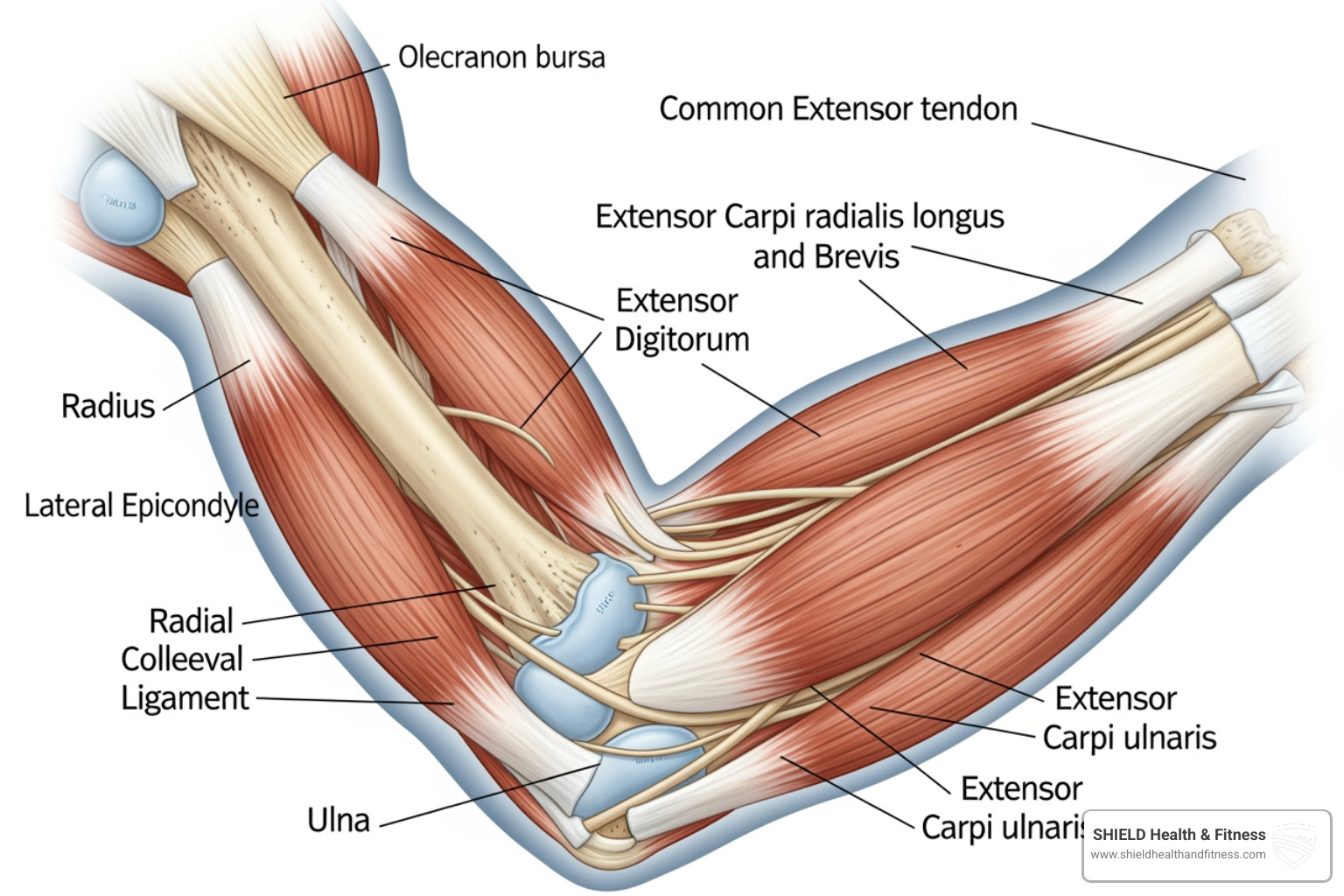
It involves the tendons connecting your forearm muscles to the bony bump on the outer elbow (the lateral epicondyle). The Extensor Carpi Radialis Brevis (ECRB) tendon, which extends your wrist backward, is most affected. Repetitive stress from swinging a paddle can cause tiny micro-tears in this tendon. While once thought to be simple inflammation (tendinitis), it's now understood as tendinosis—a degenerative breakdown of the tendon tissue. Think of it as a rope fraying from constant use. Each swing adds stress, eventually leading to pain and weakness. For more on tendon irritation, see What is tendinitis?.
Common Symptoms to Watch For
Early warning signs of elbow pain in pickleball players experience can be subtle but worsen over time. Watch for:
- Pain on the outer elbow: A dull ache or burning sensation around the bony knob, especially during or after play.
- Pain radiating down the forearm: Discomfort that spreads toward the wrist, making it painful to grip a paddle, open jars, or shake hands.
- Weak grip strength: The paddle may feel heavy, or you might drop things unexpectedly.
- Morning stiffness: The elbow feels tight and sore after periods of rest, though it may loosen with movement.
- Tenderness to touch: The bony area on the outside of the elbow is sore, even with gentle pressure.
- Pain that doesn't improve with rest: If time off the court doesn't resolve the discomfort, it's a sign of a bigger issue.
Primary Causes of Wrist Pain in Pickleball
Understanding the causes of pickleball wrist pain is just as key to recovery and prevention as it is for elbow pain in pickleball. Most cases stem from identifiable factors:
- Overuse: Playing too much, too often without adequate rest is the primary cause. The repetitive stress of dinks, volleys, and serves creates the perfect environment for injury.
- Poor biomechanics: A flawed backhand is a major culprit. Relying on wrist and elbow power instead of engaging the core, legs, and shoulders places enormous strain on forearm tendons. Hitting the ball late or behind your body forces the elbow into awkward, stressful positions.
- Uneven muscle development and tone: A common aspect for newer players can be muscular weakness in the shoulder blade, rotator cuff, or muscles, of the arm. This weakness can lead to poor wrist stability and position as risk factors.
- Equipment issues: A grip that is too small or too large forces you to squeeze harder, straining your forearm. Heavier paddles or those without vibration dampening also increase the load on your elbow.
- Inadequate warm-up and stretching: Cold muscles and tendons are not prepared for explosive movements. Neglecting to stretch after play leads to tightness and makes the wrist more vulnerable.
- To learn more: This review from a clinician offers more great insights on wrist pain in pickleball.
How to Treat and Manage Pickleball Elbow and Wrist Pain
When pickleball players experience arm pain, the goal is to reduce discomfort, promote healing, and prevent recurrence. Fortunately, many effective strategies can be done at home.
At-Home Remedies for Pain in Pickleball
For most mild to moderate cases, consistent home care provides significant relief.
- R.I.C.E. Method: Rest is essential—stop or significantly reduce playing. Playing through pain will only worsen the injury. Apply Ice for 10-15 minutes several times a day to reduce pain and inflammation. Use an elbow sleeve for Compression to provide support and reduce swelling. Lift the elbow above heart level when resting.
- Gentle Stretching: Extend your arm, palm down, and use your other hand to gently pull your fingers back toward your body. Hold for 15-30 seconds and repeat several times daily to stretch the top of your forearm.
- Eccentric Strengthening: These exercises are highly effective for tendon repair. A simple one is the wrist extension: sit with your forearm on a table, palm down, holding a light weight (1-2 lbs). Use your good hand to lift the weight, then slowly lower it with your injured arm. Aim for 3 sets of 10-15 reps daily.
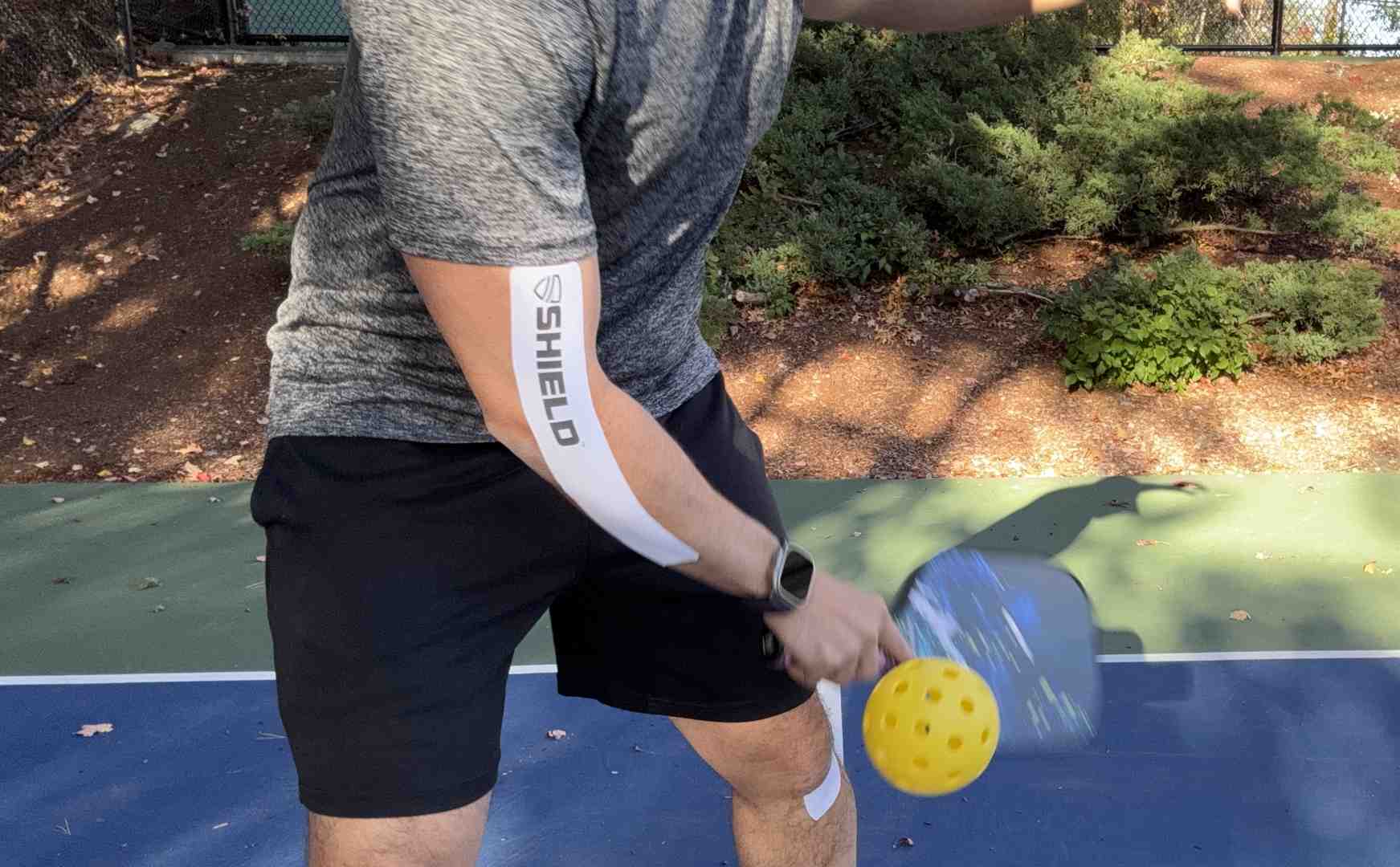
- Athletic Taping: Proper taping with kinesiology or stretch tape supports forearm muscles, reduces stress on the tendon, and improves circulation. It can make a noticeable difference in managing daily pain. You can learn about stretch tape for support or explore our athletic tape for injuries guide. Common and popular tapes for the elbow include SHIELD APEX dynamic kinesiology tape, and SHIELD REFLEX tapes are ideal for the wrist.
- Pain Relievers and Topicals: Over-the-counter anti-inflammatories like ibuprofen can help, but check with a doctor first. Topical creams with diclofenac or lidocaine offer localized relief.
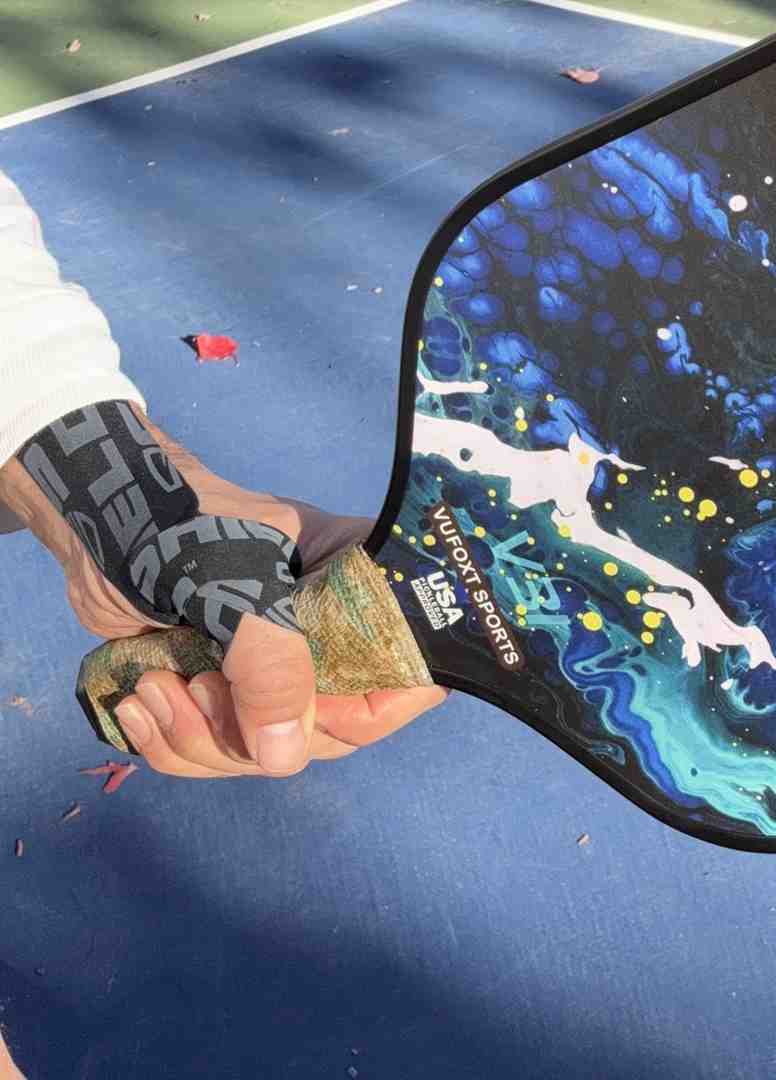
- Grip taping: Using grip tapes such as our SHIELD STICK GRIP TAPE can help increase the cushion around the grip and improve paddle ergonomics
When to Seek Professional Medical Help
While home treatment is effective, some situations require professional attention. See a doctor if:
- Pain lasts longer than a month despite rest and home care.
- Pain interferes with daily activities like lifting a cup or opening a door.
- You experience numbness or tingling in your arm, hand, or fingers.
- You have severe weakness in your grip or forearm.
- Pain worsens even with rest.
A doctor or physical therapist may recommend:
- Physical Therapy: A physical therapist will create a custom program of advanced strengthening, stretching, and manual therapy. They can also help correct technique flaws.
- Corticosteroid Injections: These can provide temporary relief by reducing inflammation but are not a long-term solution.
- Regular Massage Therapy
Prevention: Your Best Defense Against Pickleball Pain
The best way to deal with wrist and elbow pain in pickleball is to prevent it from happening. Smart choices about technique, equipment, and conditioning can dramatically reduce your risk. For general guidance, Harvard Health offers a helpful resource: How to avoid this common pickleball injury.
Proper Technique and Body Mechanics
Improving how you move on the court is critical for preventing pain in pickleball.
- Hit the ball in front of your body. This engages your legs, hips, and core, transferring the workload from your small elbow tendons to your large muscles.
- Use your core and legs for power. Power should flow from the ground up. Push off with your legs, rotate your hips, and engage your core. Your arm should be the delivery system, not the power source.
- Keep a short backswing. A compact, efficient backswing, especially on volleys and dinks, reduces torque on the elbow joint.
- Swing from the shoulder. Focus on using the larger shoulder joint rather than flicking your wrist or bending your elbow to generate force.
- Maintain a relaxed grip. A death grip creates constant tension. Aim for a "firm handshake" pressure (about 4 out of 10), holding the paddle more with your fingers than a clenched palm.
- Improve footwork. Good court positioning allows you to consistently hit the ball in front of you with proper form. A lesson with a certified coach can identify and correct technical issues.
Equipment, Conditioning, and Warm-Ups
Your gear and physical preparation are key pieces of the prevention puzzle.
- Paddle Selection: A midweight paddle (7.3-8.3 ounces) offers a good balance of power and control without overworking the elbow. Ensure the grip size is correct; a grip that's too small or large causes you to over-grip. Paddles with vibration dampening technology absorb shock, and a cushioned overgrip can add more protection. Stick grip tape can help reduce vibration as well.
- Proper Footwear: Court-specific athletic shoes provide the stability needed for efficient movement, reducing the likelihood of off-balance shots that strain the elbow.
- Warm-Up and Cool-Down: Always perform a 10-15 minute dynamic warm-up before playing, including arm circles, shoulder rolls, and light movement. Afterward, perform static stretching, holding stretches for 20-30 seconds for your forearms, wrists, and shoulders to maintain flexibility.
- Strength Training: This is your secret weapon. Build a protective shield around your joints by strengthening key areas 2-3 times per week:
- Forearms: Wrist curls, reverse wrist curls, and grip squeezes.
- Shoulders: Shoulder presses and resistance band work to strengthen the rotator cuff and create a stable base.
- Core: Planks and rotational exercises to help generate power from your lower body and transfer it efficiently.
At SHIELD Health & Fitness, we've seen countless athletes improve their longevity by taking prevention seriously. These habits will help you play pain-free for years to come.
Safely Returning to Pickleball After Elbow or Wrist Pain
After dealing with arm pain in pickleball has caused, eagerness to return to the court is natural. However, rushing back is a common mistake that can lead to re-injury. A thoughtful, gradual approach is crucial for a successful and lasting return.
Start slow and be patient. Your first sessions back should be a gentle reintroduction. Begin with just 15-20 minutes of light dinking or soft volleys. Avoid hard drives and competitive games. If your elbow feels good, you can gradually increase playing time by 10-15 minutes each week.
Listen to your body and do not play through pain. Muscle fatigue is normal, but any sharp pain or aching in the elbow is a clear signal to stop and rest. Respecting these signals is key to long-term, pain-free play. Playing through discomfort is the fastest way to turn a healing injury into a chronic problem.
This is the perfect time to implement technique corrections. Focus on hitting the ball in front of your body, using your core for power, and maintaining a relaxed grip. These adjustments are critical for long-term joint health. Consider a session with a coach to ensure your mechanics are sound.
Continue your conditioning exercises. The forearm, shoulder, and core strengthening that helped you recover should become a permanent part of your routine to build resilience against future injuries.
Use supportive tape for stability and confidence. During this transition, stretch tape can support muscles and tendons without restricting movement. At SHIELD Health & Fitness, our professional-quality tapes are designed to give athletes crucial support as they rebuild strength. An elbow brace or compression sleeve can also be beneficial.
Finally, always warm-up and cool-down, even for short sessions. Preparing your body for activity and helping it recover afterward is essential for protecting your healing elbow.
Returning to play after recovery time requires patience, but this gradual approach will get you back to enjoying the sport stronger and smarter than before.
Frequently Asked Questions about Pickleball Elbow
Here are answers to the most common questions players have about this frustrating injury.
How long does pickleball elbow take to heal?
The recovery timeline for arm pain in pickleball causes varies. The most important factor is how early you address the problem.
- Minor Cases: If caught early, recovery may take only a few weeks with proper rest and self-care.
- Moderate Cases: For more established pain, recovery often takes over a month of consistent physical therapy and activity modification. A complete break from pickleball for about six weeks is often recommended.
- Severe/Chronic Cases: Recovery can take up to a year or longer. More intensive treatments like PRP injections or, in rare cases, surgery, will extend this timeline.
Your body needs time and the right conditions to heal. Rushing back will only restart the recovery clock.
Is pickleball elbow the same as tennis elbow?
Yes, they are the exact same condition. Both are common names for Lateral Epicondylitis.
The medical reality is identical: irritation and micro-tears in the extensor tendons on the outside of the elbow. Both sports involve repetitive wrist extension while gripping a paddle or racket, which places similar stress on the same tendon. So, if a doctor diagnoses you with tennis elbow despite you only playing pickleball, they are using the standard medical term for the injury.
Can I still play pickleball with mild elbow pain?
We do not recommend playing through pain, even if it seems minor.
Playing through pain is one of the fastest ways to turn a manageable issue into a chronic problem. What might have healed in a few weeks with rest could turn into months of frustration. When your elbow hurts, your body compensates by altering your swing, which can lead to new injuries in your shoulder, wrist, or back.
Every time you aggravate the irritated tendon, you reset its healing process. Instead of pushing through, take a break and focus on at-home remedies, strengthening, and analyzing your technique. If pain persists despite rest, consult a doctor. A short break now can prevent a much longer layoff down the road, ensuring you can play for years to come.
Conclusion
If there's one takeaway, it's this: elbow and wrist pain in pickleball is common, frustrating, but it doesn't have to end your time on the court. Armed with the right knowledge, you can overcome it and return stronger.
We've learned that pickleball elbow (Lateral Epicondylitis) results from overuse and that its primary risk factors—poor technique, improper equipment, and inadequate conditioning—are within your control.
Prevention is your best strategy. Focus on proper mechanics like hitting the ball out in front, using your core for power, and maintaining a relaxed grip. Choose the right equipment and never skip your warm-up. When pain does appear, listen to your body. Rest, ice, stretching, and targeted strengthening are your first lines of defense. Know when to see a professional, as pushing through pain only makes things worse.
At SHIELD Health & Fitness, we've spent over 35 years helping athletes stay in the game. Our American-made athletic tapes and protective tools are trusted by professional teams and designed to provide the support you need to play at your best. The path to pain-free pickleball requires patience, but it is absolutely achievable.
Ready to protect your game? Explore our complete guide to athletic tape for injuries and find how SHIELD can help you play your best, pain-free.
