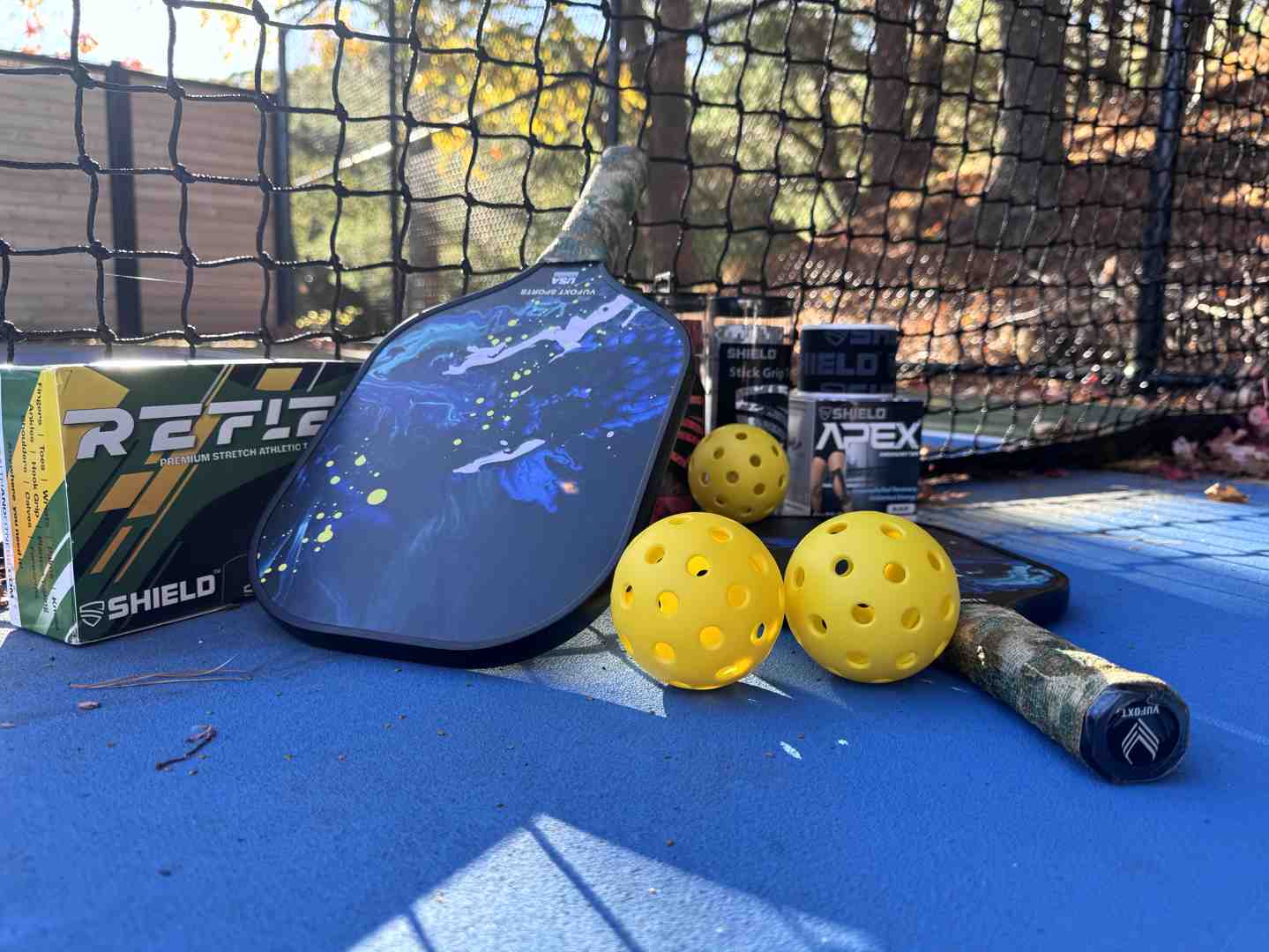
Stay Strong on the Court: Solutions for Knee Support in Pickleball
Why Knee Support Matters for Pickleball Players
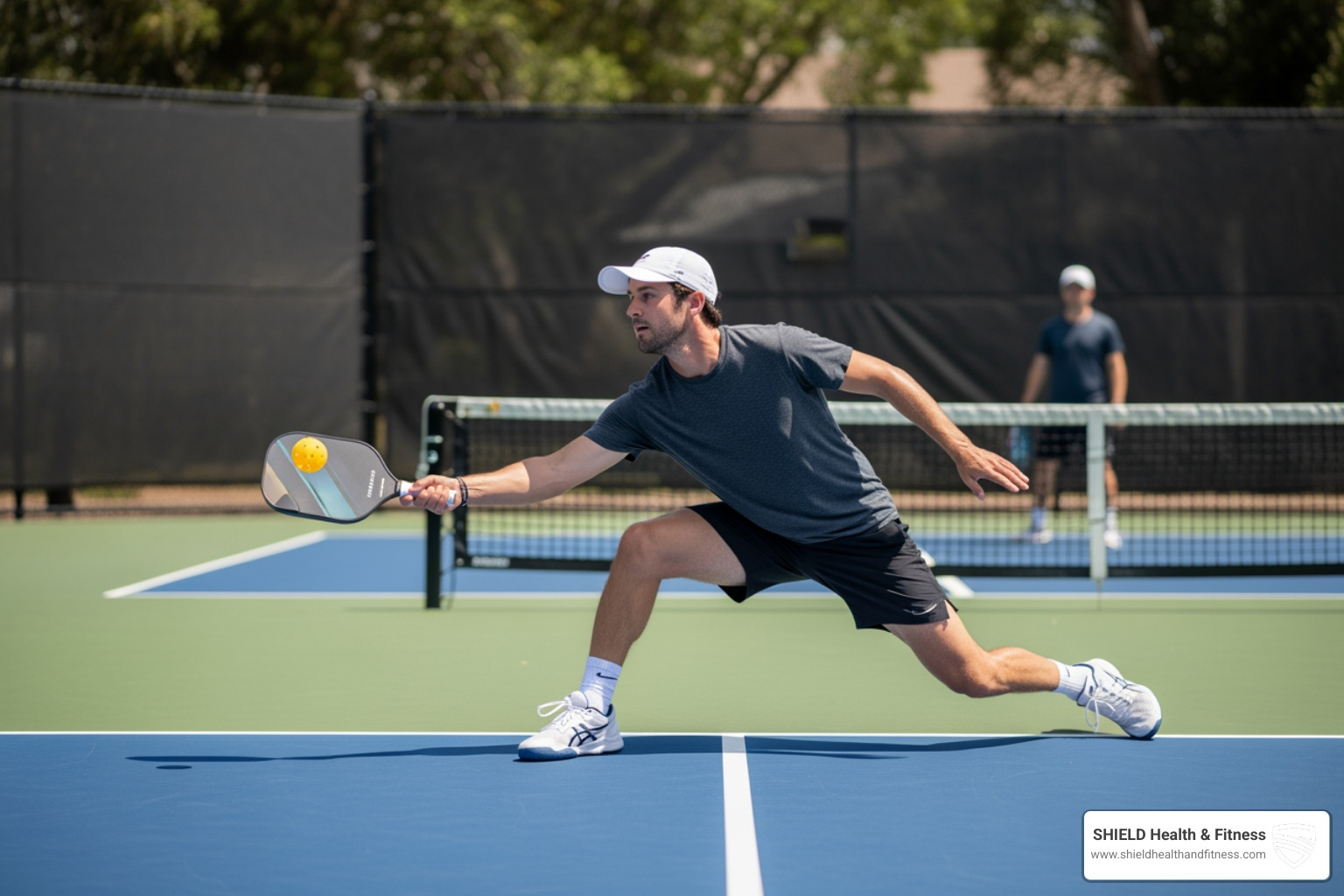
Answers for knee support in pickleball has become an essential and popular category of sports equipment. Pickleball has exploded in popularity over recent years. With more than 8.9 million Americans playing in 2022, pickleball's unique combination of lateral movements, sudden stops, and repetitive bending creates distinct challenges for your knees—even though it's considered a low-impact sport.
Top knee support options for pickleball players:
- Compression sleeves - Light support for general stability and circulation
- Knee stabilizers with stays - Moderate support for patellar tendonitis and mild instability
- Athletic tape - Customizable support without restricting movement
- Kinesiology tape - Applied for longer times; more dynamic than a brace, more flexible than traditional tapes
- Combination approach - Tape or sleeve during play, compression therapy after
Pickleball's quick directional changes stress your knees differently than running or cycling. Similar to tennis and even basketball, pickleball challenges agility and joint health. Common injuries include patellar tendonitis, ligament strains, and knee osteoarthritis. Whether you're recovering from injury or playing preventively, the right support keeps you on the court longer.
I'm Josh Key, and with our team at SHIELD Health & Fitness, we support product development with athletes across the country to build innovative and useful solutions in tapes and wraps for all athletes, and in any sport. I've seen how proper knee support in pickleball transforms players' ability to stay active and pain-free. The key is matching your support level to your specific needs—something we'll break down in detail throughout this guide.
Understanding Knee Support Pickleball Requirements
To understand why your knees might be barking after a long Saturday session at the courts, we first have to look at the mechanics of the game. Pickleball is a hybrid sport—part tennis, part badminton, and part ping-pong. This means you aren't just moving forward and backward; you are constantly shuffling laterally, pivoting to reach a wide dink, and lunging deep into the "kitchen" (the non-volley zone).
The Anatomy of Pickleball Knee Pain
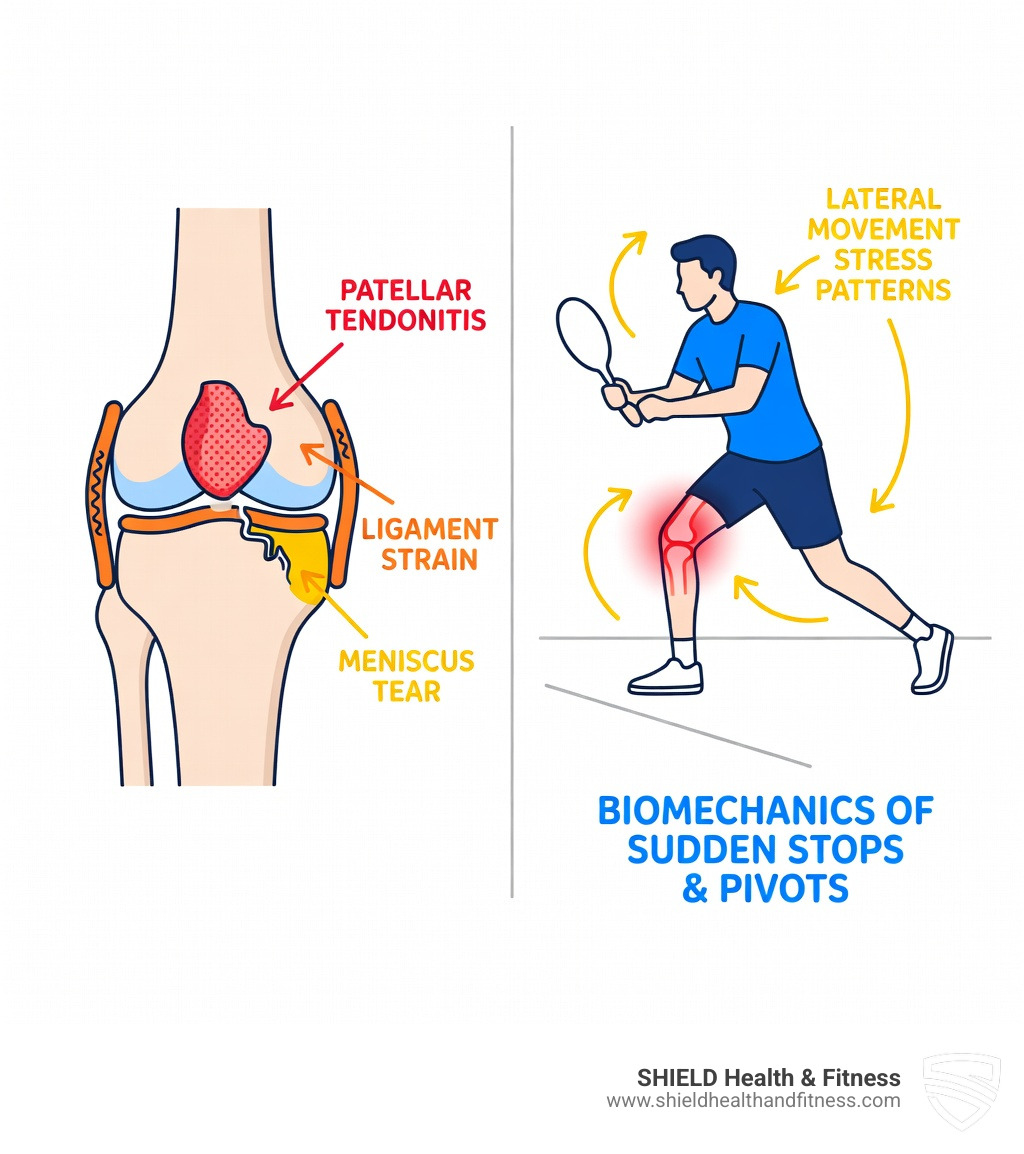
The knee is a complex hinge joint that relies on a delicate balance of ligaments, tendons, and cartilage to stay stable. In pickleball, the most common issues we see include:
- Patellar Tendonitis: Often called "jumper's knee," this is an overuse injury caused by repetitive stress on the tendon that connects your kneecap to your shinbone. The constant stopping and starting in pickleball is a prime culprit.
- Ligament Strains (ACL/MCL): While less frequent than in high-impact sports like football, sudden pivots or "catching" a foot on the court surface can lead to strains in the Anterior Cruciate Ligament (ACL) or Medial Cruciate Ligament (MCL).
- Meniscus Tears: The meniscus is the shock-absorbing cartilage in your knee. Repetitive twisting under weight (like when you pivot to return a serve) can cause small tears over time.
- Knee Osteoarthritis: For many of us in the 50+ demographic who love the sport, existing wear and tear can be aggravated by the hard court surface.
Why Lateral Stability is Key
Unlike running, where your knee mostly moves in one plane, pickleball requires "braking" capacity. When you sprint toward the sideline to save a ball, your knee has to absorb the force of your entire body weight shifting sideways. This is where Knee support for pickleball really** comes in handy. They provide the external "scaffolding" needed to keep the joint aligned when your muscles get tired.
If you are struggling with specific pain patterns, it is helpful to review resources like Pickleball knee pain: tips and exercises to understand how movement affects your specific symptoms.
Choosing the Right Level of Support for Your Game
Not every player needs a heavy-duty brace. In fact, wearing a brace too much or without a proper fit can sometimes limit the agility you need for those quick volleys, can lead to increased irritation, and can even prevent strengthening and recovery. We categorize Knee support pickleball options into three main levels to help you find your perfect match.
Support Level Comparison Table
| Support Level | Best For | Key Features |
|---|---|---|
| Mild (Tapes, Sleeves) | Minor aches, swelling, prevention | Compression, breathability, improves circulation, and allows full movement and agility |
| Moderate (Stabilizers - Tape, Kinesiology, etc) | Patellar tendonitis, mild instability | Reinforced support, dynamic support through full range of motion |
| Maximum (Hard braces and hinged equipment) | Ligament recovery, severe instability | Metal or plastic hinges, rigid support, lateral protection and partial immobilization |
Mild Support: Moderate Tapes, Compression Sleeves
As a starting level of support, a mild tape application or a soft, flexible compression sleeve can be a good starting support point. These work by providing medical-grade compression that boosts blood flow and provides proprioceptive feedback (telling your brain exactly where your knee is in space). Our tapes at SHIELD Health & Fitness are designed with breathable fabrics to ensure you don't overheat during a mid-day match in the sun.
They include two examples of Mild Support:
- SHIELD POLAR - This special cooling cohesive wrap offers compression and free movement, while cooling the knee for 45-70 minutes. This combination of effects offers comfort, compressive support, and can be applied without adhesive, for easy later removal
- SHIELD REFLEX - A soft unique stretch tape, this adhesive cotton material feels like a milder version of kinesiology tapes, but has no waste liner, doesn't need scissors, and can be applied around the knee for full support without the heavy adhesive of kinesiology tapes.
Moderate Support: Stabilizers and Kinesiology Tapes
This is the "sweet spot" for many active pickleball players. These supports often feature "spring steel stays" or flexible side supports that provide lateral stability without the bulk of a full hinge. Many also include a silicone or padded buttress that surrounds the kneecap, helping it track properly during deep lunges.
Moderate support from Kinesiology Tapes is also popular for knee support. Taping, using guides found online posted by trained clinicians, can help support the knee LIKE a brace, without limiting range of motion. Better, Dynamic Kineioslogy tapes such as SHIELD APEX stretch in every direction - just like our skin when we move. This type of high-performance kinesiology tape has high-stretch and an adhesive that lasts for days - even weeks - providing constant support without bulking up the knee and making it harder to move.
SHIELD even offers a specialty kinesiology tape infused with nano-CBD; only suitable for adults and according to local regulations, CBD in kinesiology tape. Some athletes choose CBD on the skin over the knee for soothing effects and comfort, so we infused it into our tape for the perfect application every time.
Maximum Support: Hinged Braces
Reserved for those with a history of ligament tears or significant joint laxity, hinged braces use mechanical hinges to prevent the knee from "giving out" or hyper-extending. While more restrictive, they offer the highest level of security for players who wouldn't be able to step on the court otherwise.
Benefits of Taping and Compression for Performance
Sometimes, a bulky brace just doesn't feel right. That’s where the "pro secret" comes in: high-quality athletic tape. At SHIELD Health & Fitness, we’ve spent over 35 years perfecting American-made tapes that stay put even when the game gets sweaty.
Why Use Athletic Tape for Pickleball?
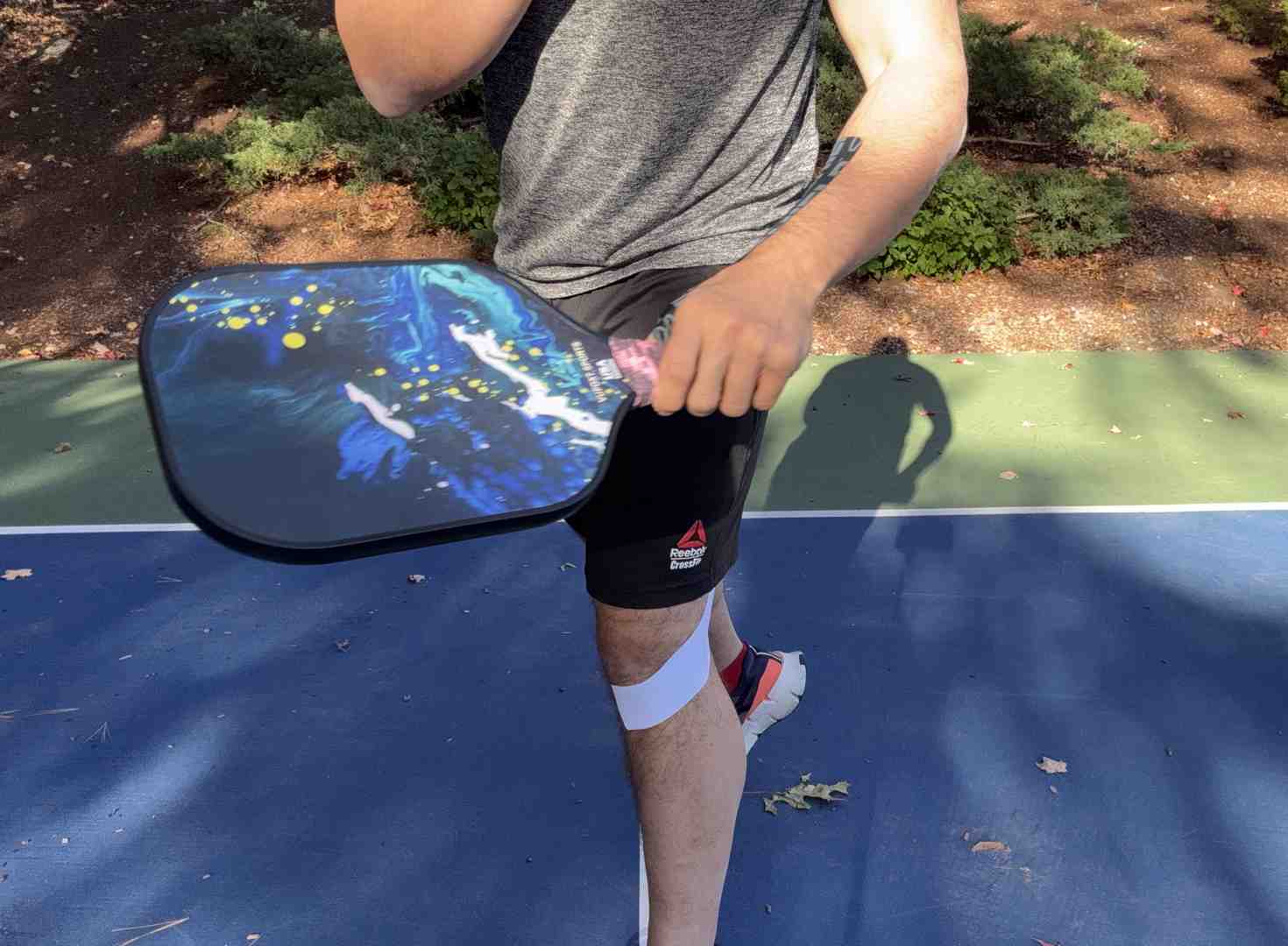
Using Athletic Tape for Injuries allows for a level of customization that a pre-made brace simply can't match. You can apply tape specifically to support the patellar tendon or to provide a "reminder" to the ligaments on the side of your knee.
- Proprioception: Tape stimulates the sensory receptors in your skin, making you more aware of your knee's position. This helps prevent awkward landings and pivots.
- Swelling Reduction: By gently lifting the skin, elastic tapes can help facilitate lymphatic drainage, reducing that post-game puffiness.
- Joint Alignment: Proper taping techniques can help pull the kneecap into a more comfortable groove, which is a lifesaver for those with chondromalacia or runner's knee.
If you're looking for the most versatile option, exploring our Athletic Tape collection is a great way to build a customized support system that fits under your usual gear.
Strengthening and Recovery Strategies for Longevity
While Knee support for pickleball can be a vital tool, it works best when paired with a strong foundation. You can't fire a cannon from a canoe; your braces need strong muscles underneath them to be truly effective.
The "Braking" Muscle: Eccentric Strengthening
Pickleball is all about the "stop." To improve your knee's ability to handle sudden stops, you need to work on eccentric strength—the phase of an exercise where the muscle lengthens under tension.
- Mini-Squats: Slow and controlled. Take 3 seconds to go down and 1 second to come up.
- Eccentric Step-Downs: Standing on a small step, slowly lower your "good" leg to touch the floor while the "working" knee stays aligned over your toes.
- Glute Bridges: Strong hips take the pressure off your knees. By strengthening your glutes, you provide better control over your leg's alignment during lateral shuffles.
For a deeper dive into conditioning, we recommend reading Optimizing Knee Health for Pickleball.
Post-Game Recovery Protocol
Recovery is just as important as the game itself. We recommend a "Relative Rest" approach. Instead of stopping all activity, simply reduce the intensity or volume of play if you feel pain.
- Ice Therapy: Apply ice for 20 minutes on and 40 minutes off after a heavy session to manage inflammation. For this, SHIELD POLAR cooling cohesive can be perfect, adding compassion to cooling.
- Compression: Wear your compression sleeves or use Athletic Tape for Plantar Fasciitis techniques if your lower legs are also feeling the strain.
- Hydration and Sleep: Your tissues need water and 7–9 hours of sleep to repair the micro-tears that happen during a competitive match.
Frequently Asked Questions about Court Safety
When to use knee support pickleball gear?
We often get asked if you should wait for an injury to start wearing support. The answer is: not necessarily! If you have a history of "tweaky" knees, or if you find that your form breaks down during the third hour of play due to muscle fatigue, a preventive sleeve or light stabilizer can be a game-changer. It acts as a safety net for when your muscles are too tired to maintain perfect joint alignment.
How to maintain your knee support pickleball equipment?
To ensure your gear lasts through a long season, follow these simple steps:
- Hand Wash Only: Use a mild detergent and warm water. Avoid the washing machine, as the agitation can break down the elastic fibers and damage Velcro straps.
- Air Dry: Never put your braces in the dryer! High heat will ruin the neoprene and specialized fabrics.
- Hygiene: If you play frequently, consider having two braces so you can rotate them, allowing one to completely dry and "breathe" while you use the other.
When should I see a doctor for knee pain?
While minor soreness is part of the game, you should seek professional medical advice if you experience:
- Persistent Swelling: "Water on the knee" that doesn't go away with rest and ice.
- Locking or Catching: If your knee feels like it gets stuck in one position.
- Sharp, Stabbing Pain: Especially pain that causes your leg to "give out."
- Inability to Bear Weight: If you can't walk comfortably to your car after a match.
A physical therapist can provide a biomechanical assessment to see if your pain is actually coming from weak hips or improper footwear rather than the knee itself.
Conclusion
Staying active on the pickleball court is about more than just having a great third-shot drop; it’s about protecting the "machinery" that gets you to the ball. By choosing the right Knee support pickleball tools—whether that’s a medical-grade stabilizer for a nagging injury or our American-made athletic tape for targeted support—you’re investing in your longevity as an athlete.
The goal isn't just to play today; it's to be able to play ten years from now. Combine high-quality gear with a smart strengthening routine, listen to your body’s signals, and don't be afraid to Stay active with athletic tape for injuries when you need that extra bit of confidence.
We'll see you in the kitchen!