

Keep Your Fingers Happy: A Climber's Guide to Injury-Free Hands
Why Climbing Finger Injury Prevention Matters More Than You Think

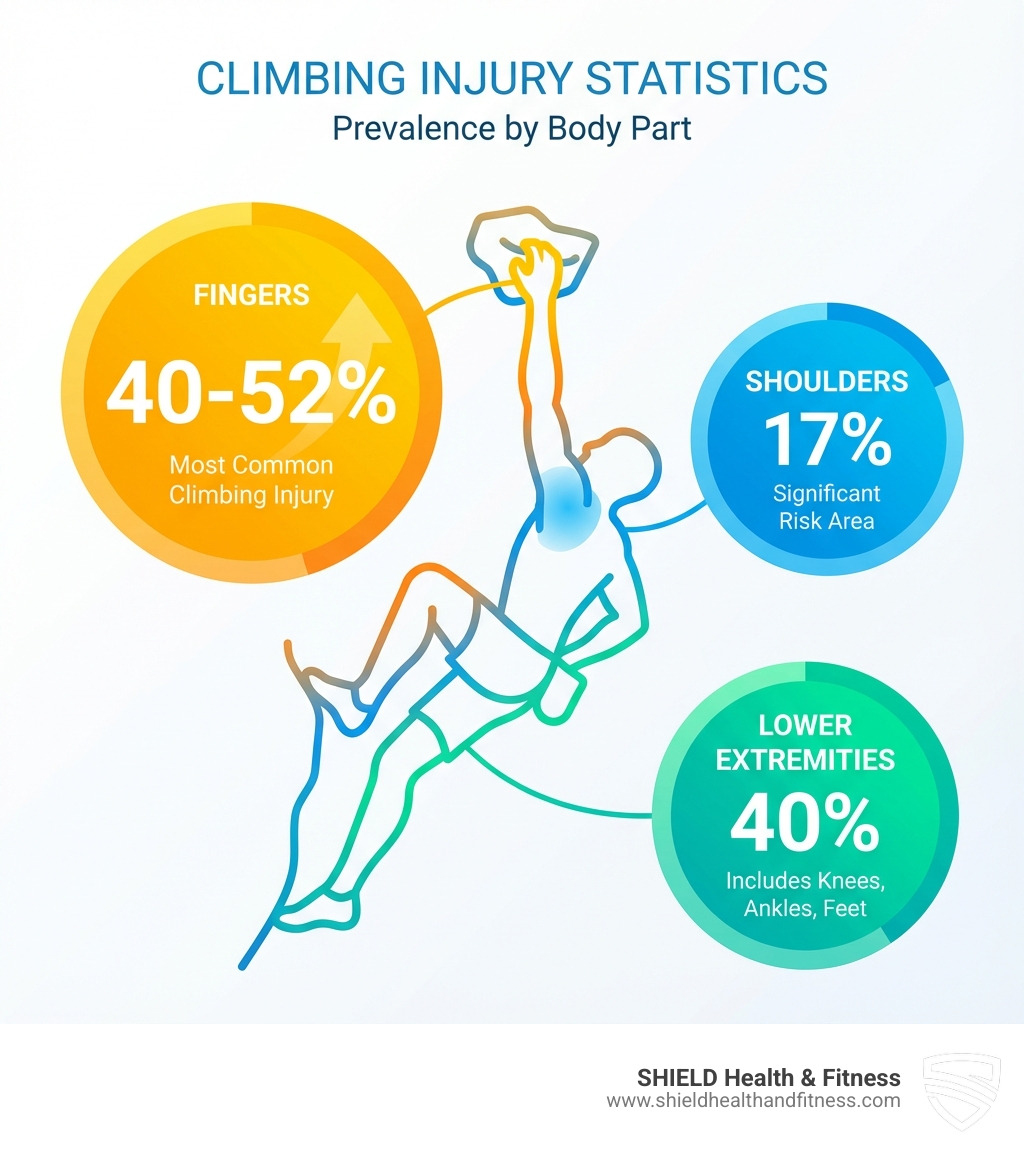
Climbing finger injury prevention is crucial because finger injuries account for up to 52% of all climbing-related injuries, making them by far the most common problem climbers face. Here's what you need to know right away:
Key Prevention Strategies:
- Warm up properly - Start on large holds and gradually increase difficulty
- Strengthen antagonist muscles - Use rubber band exercises for finger extensors
- Manage your load - Avoid sudden spikes in training volume or intensity
- Focus on technique - Better body positioning reduces finger strain
- Rest adequately - Allow time for tissue recovery between sessions
- Preventative Taping - under strain or some abrasions, tape can protect from injury and support battered fingers
If you've ever heard that alarming "pop" while gripping a hold, or felt that nagging ache in your fingers that won't go away, you're not alone. The average climber thinks less about finger health than most people think about their overall wellness—which is saying something. Many climbers ignore minor discomfort until a significant injury forces them off the wall for weeks or even months.
The good news? Most finger injuries are preventable. With the right knowledge about anatomy, smart training habits, and proper recovery strategies, you can build robust fingers that last for decades of climbing. This guide will walk you through everything from understanding how your pulleys work to recognizing when a tweak needs professional attention.
I'm Josh Key, and through my work with SHIELD Health and Fitness, I've supported athletes from Spartans to legendary ice climbers with performance and recovery solutions, with a specific focus on climbing finger injury prevention and hand health. This guide combines insights from physical therapists, elite climbers, and current research to help you keep your fingers happy and healthy.
Understanding Your Fingers: Anatomy and Common Injuries
Our fingers are truly incredible tools, capable of intricate movements and immense strength. For climbers, they are our primary connection to the rock, the plastic, or the ice. But this reliance makes them vulnerable. Understanding the intricate anatomy of our fingers and how they function during climbing is the first step in climbing finger injury prevention.
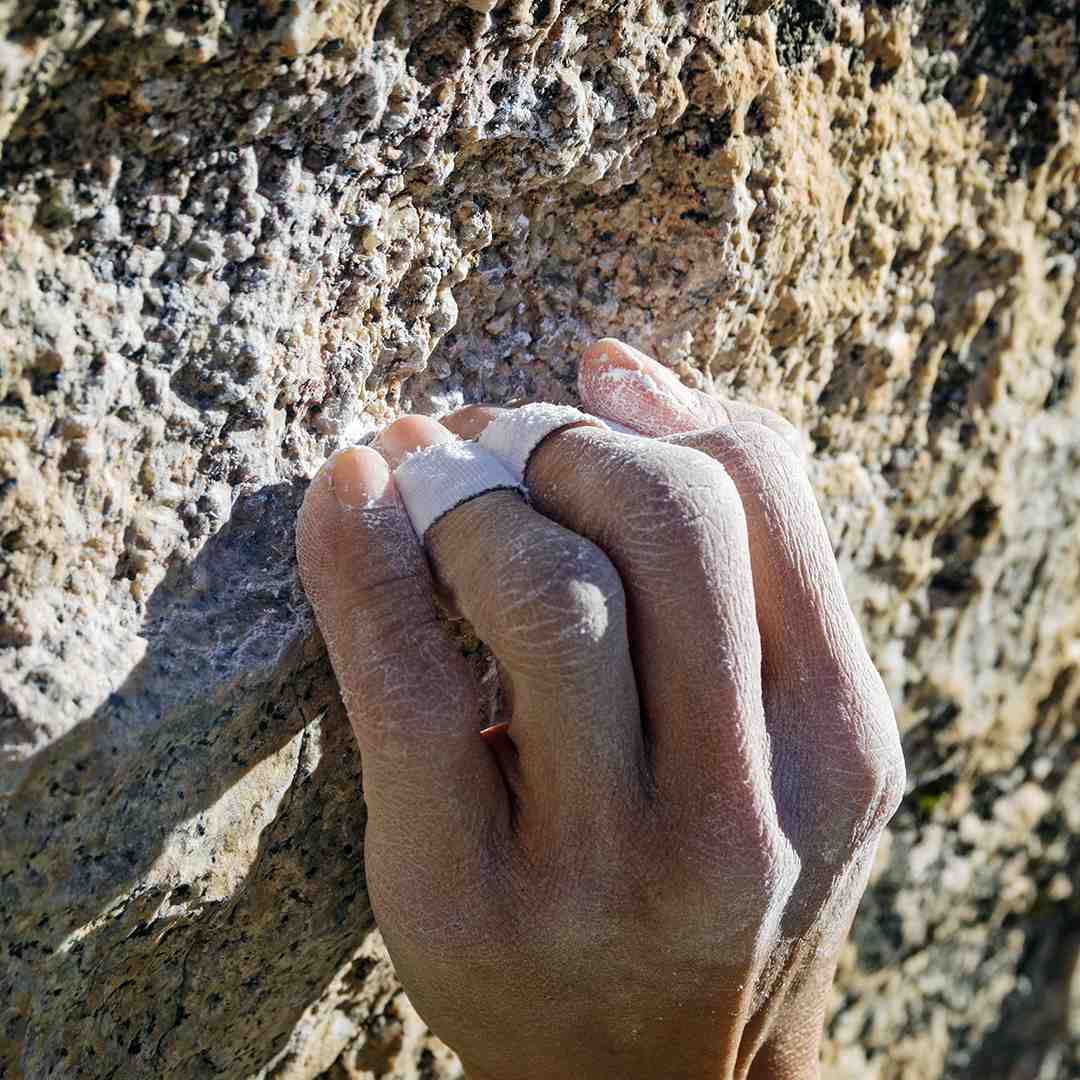
At the core of our finger strength are two main sets of flexor tendons: the Flexor Digitorum Superficialis (FDS) and the Flexor Digitorum Profundus (FDP). These tendons run from our forearms, through our palms, and attach to our finger bones, allowing us to curl our fingers and grip. To keep these tendons close to the bones and prevent them from "bowstringing" (lifting away from the bone like a bowstring) under heavy loads, we have a series of fibrous bands called pulleys. The most critical of these are the annular pulleys (A1-A5) and cruciform pulleys (C1-C3).
When we pull hard on a hold, especially in a crimped position, immense force is generated through these tendons and pulleys. The A2 pulley, located at the base of the finger near the palm, and the A4 pulley are particularly crucial and bear the brunt of the load. While the A2 pulley is capable of withstanding up to 400 Newtons (N) of force, a full crimp position can generate up to 450N at this very pulley, pushing it beyond its limit. This explains why pulley injuries are so common.
Common finger injuries in climbing include:
- Pulley Sprains and Ruptures: These are the most common, often affecting the A2 pulley in the ring or middle finger. They can range from a mild strain to a complete rupture, sometimes accompanied by an audible "pop." Pulley injuries represent 30% of finger injuries and 12% of all climbing injuries.
- Tendinopathy: Inflammation or degeneration of the flexor tendons themselves, often due to overuse.
- Synovitis and Capsulitis: Inflammation of the joint capsule or synovial membrane, which lubricates our joints. This can lead to stiffness, swelling, and pain.
For a more comprehensive understanding of these issues, we recommend reading a Detailed overview of pulley injuries.
The Role of Grip Types in Climbing Finger Injury Prevention
The way we grip a hold fundamentally changes the forces exerted on our finger anatomy, directly impacting our risk of injury. This is a critical aspect of climbing finger injury prevention.
- Crimp Grip: This is perhaps the most powerful but also the riskiest grip. In a full crimp, the DIP joint (the outermost joint) is hyperextended, while the PIP joint (the middle joint) is sharply flexed. The thumb often locks over the index finger. This position puts extreme stress on the A2 and A4 pulleys. As mentioned, a crimp can generate up to 450N at the A2 pulley, exceeding its capacity. This is why we see so many pulley injuries related to crimping. A smaller crimp grip also increases the activation of the Flexor Digitorum Profundus (FDP) compared to the Flexor Digitorum Superficialis (FDS), further concentrating stress.
- Open-Hand Grip: This grip involves a more natural, rounded hand position, with all finger joints slightly bent. The load is distributed more evenly across the tendons and pulleys, reducing the risk of focused stress. Many elite climbers, like Dave MacLeod, have significantly reduced their pulley injuries by consciously shifting towards a more open-handed grip whenever possible.
- Half-Crimp Grip: A compromise between the full crimp and open hand, where the PIP joint is at a 90-degree angle and the DIP joint is slightly flexed. It's often more stable and less stressful than a full crimp.
- Pockets: When using pockets, especially with fewer fingers, we risk specific injuries. Forcefully curling unloaded fingers into the palm while pulling hard can injure the small lumbrical and interosseous muscles in the palm, as well as the forearm tendons. It's better to keep unloaded fingers relaxed.
- Slopers: These holds encourage an open-hand grip and typically distribute the load broadly, generally posing a lower direct pulley injury risk but demanding more overall body tension.
Our individual morphology, or the unique structure of our hands and fingers, also plays a huge role. Not every climber's fingers are built to safely hang on tiny edges without risking injury. What works for one climber might not work for another. Understanding your personal physiology should dictate how you train and the grip types you favor to ensure both performance and longevity.
Proactive Strategies for Climbing Finger Injury Prevention
The best offense is a good defense, and this holds true for our fingers in climbing. Focusing on proactive habits, consistent training, and smart choices can build robust fingers capable of withstanding the demands of our sport. This section is the core of our guide, offering actionable strategies for effective climbing finger injury prevention.
The Foundation: Proper Warm-ups and Cool-downs
Neglecting warm-ups and cool-downs is a common pitfall. Our fingers are not designed to go from zero to hero instantly.
- General Warm-up: Start with 10-15 minutes of light cardio to get your blood flowing. Follow this with dynamic stretches and joint rotations for your wrists, elbows, and shoulders.
- Climbing-Specific Warm-up: This is crucial. Begin on easy, large holds, focusing on movement and technique without pulling hard. Gradually increase the difficulty and decrease hold size over 20-30 minutes. Avoid pockets and crimps when your fingers are cold; use open-hand grips initially. Proper warming up is thought to prevent injury by increasing physiologic bowstringing of the flexor tendons by up to 30%, preparing them for load.
- Cool-down Importance: Just as important as warming up, cooling down helps facilitate recovery and reduce stiffness. We should engage in light activity after our climbing session.
- Regeneration Hangs/Minimums: These involve short bursts of activity (e.g., 10 moves) at 30-60% body weight, followed by a minute of rest, repeated 5 times. This stimulates soft tissue and synovial fluid, aiding joint health.
- Gentle Stretching and Mobility:
- Joint Distractions: Gently pull your finger bones apart (DIP and PIP joints) for about 30 seconds per joint. This helps increase space and aids synovial fluid refill.
- Accessory Movements: Gently twist your fingers (like a corkscrew) for 15 seconds each way to maintain range of motion.
- Extensor Stretches: Press the back of your hand onto a soft surface, holding for 30 seconds, to counteract the constant flexion of climbing.
- Pen Rolls: Roll a pen between your fingers to mobilize joints and increase blood flow.
- Wrist Stretches: Standard wrist flexor and extensor stretches held for 30 seconds each.
Building Resilience: Essential Exercises for Climbing Finger Injury Prevention
While climbing naturally strengthens our flexors, we often overlook our extensor muscles and the overall balance of our hand and forearm. This imbalance can lead to injuries.
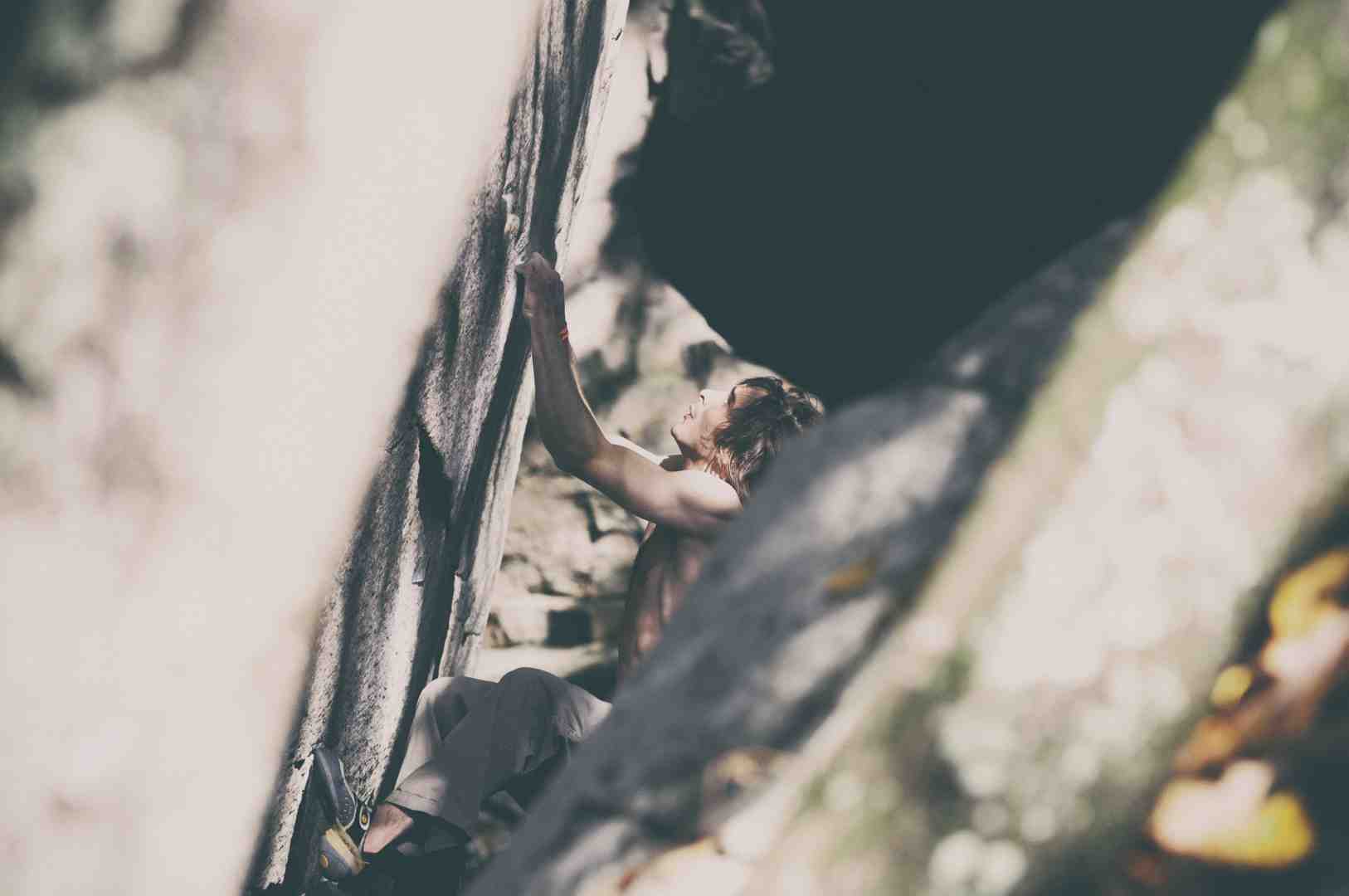
- Antagonist Muscle Training: Strengthening the finger extensors (the muscles on the back of your hand and forearm that open your hand) is paramount. They help balance the forces on our pulleys and prevent injury.
- Rubber Band Extensions: Place a thick rubber band around the tips of your fingers while maintaining a straight wrist. Spread your fingers wide without bending your wrist, hold for a moment, then let them collapse back in. Perform three sets of 30 seconds. You can increase resistance by using multiple rubber bands (we often find thick ones in the vegetable section of grocery stores!).
- Isometric Holds: Perform isometric holds for your finger extensor muscles at varied angles to mirror climbing actions. Hold for three sets of 30 seconds, adjusting the hold duration to match your typical climbing grip times.
- Controlled Flexor Strengthening (Hangboard Principles for Health): Hangboarding, when done correctly, can be a fantastic tool for climbing finger injury prevention and strength building.
- Slow Progression: Never jump straight into maximal hangs. Start with your feet on the ground, gradually reducing support as your fingers adapt.
- Focus on Form: Poor form can transfer stress to shoulders and elbows. Keep your body engaged and stable.
- Avoid Overtraining: More is not always better. Listen to your body and prioritize recovery.
- Beneficial Finger Health Exercises: Beyond hangboarding, incorporating tools like a no-hang device or specific resistance bands for controlled flexor work can build targeted strength. These are best done with careful attention to pain signals and gradual increases in load.
Smart Training: Load Management and Periodization
One of the quickest ways to get injured is by doing too much, too soon. Our connective tissues adapt slowly, and respecting this timeline is fundamental for climbing finger injury prevention.
- Principle of Progressive Overload: We need to gradually increase the demands on our fingers to stimulate adaptation. However, this must be progressive.
- Avoiding Sudden Spikes: Avoid drastic increases in climbing volume, intensity, or the introduction of new, highly stressful training methods (like bouldering V-hard grades after a long sport climbing season). These "load spikes" are a primary cause of overuse injuries.
- Periodization Concepts: Structuring our training throughout the year is key.
- Off-Season: Focus on lower-volume strength training, including finger strength, to build a solid foundation.
- In-Season: Shift focus towards endurance and power, gradually tapering finger strength work to peak for performance without over-stressing.
- Importance of Rest Days: Rest is not passive; it's when our body repairs and rebuilds. Adequate rest between sessions is arguably the best way to prevent injury. If you don't feel at least 90% recovered after your rest days, it's a clear sign you need more rest or to reduce training intensity. Even elite climbers with A2 pulley injuries were able to return to climbing after forty-five days of rest, highlighting the body's need for recovery.
- Listening to Your Body: Pay attention to persistent soreness, stiffness, or unusual aches. These are signs of overtraining and potential injury.
Technique is Key: How Movement Reduces Strain
Our climbing technique can either exacerbate or alleviate the stress on our fingers. Good technique is a powerful tool for climbing finger injury prevention.
- Body Positioning: Engage your core, keep your hips close to the wall, and maintain active shoulder engagement. This distributes weight away from your fingers and into your larger muscle groups. Avoid "dead hanging" with shrugged shoulders during breaks, as this can stress your rotator cuff and biceps tendon.
- Using Your Feet: Our feet are our biggest asset. Push with your feet to drive your body up, rather than pulling excessively with your fingers. This reduces the load on your hands significantly.
- Static vs. Dynamic Movement: While dynamic moves are exciting, they can place sudden, high loads on your fingers, especially on small holds. When possible, perform large moves from small edges more statically, pushing with your feet instead of relying solely on finger power.
- Efficient Movement: Learn to move fluidly and efficiently. Every unnecessary pull or wasted movement adds to the cumulative stress on your fingers.
- Supportive Taping: For added support during climbing or training, especially if you're prone to skin tears or want to reinforce certain grips, consider using athletic tape. Our American-made sports tape for fingers can provide targeted protection and support without hindering movement.
When Tweaks Happen: Recognizing and Managing Finger Injuries
Despite our best efforts in climbing finger injury prevention, sometimes tweaks happen. Knowing how to recognize the signs of an injury and manage it effectively is crucial for a quick and full recovery.
Signs and Symptoms:
- Audible "Pop": This is a classic sign of a pulley rupture, especially the A2 pulley in the ring finger.
- Localized Pain and Tenderness: Pain directly over the pulley (often the A2 at the base of the finger) that worsens with pressure or crimping.
- Swelling and Bruising: Inflammation and tissue damage can cause visible swelling and sometimes bruising around the affected area.
- Pain with Crimping/Gripping: Difficulty or pain when trying to grip holds, particularly small crimps.
- "Bowstringing": In severe cases of pulley rupture, you might see or feel the flexor tendon lifting away from the bone in your palm.
- Differentiation: Pain radiating into the hand or wrist might indicate a flexor tendon injury, while stiffness, swelling, and tenderness along the knuckles could point to joint issues rather than a pulley injury.
When to See a Professional: If you experience severe pain, significant swelling, visible bowstringing, or if your pain persists after a few days of rest, it's time to consult a climbing-injury specialist or medical professional. Early diagnosis is key to effective treatment.
Stages of Healing: Tissue healing is a complex process that occurs in three overlapping phases:
- Acute Phase (Days 1-5): This is the inflammatory phase. We'll experience pain, swelling, and tenderness. Our focus here is pain control (ice can help, though its effect on overall healing is debated) and gentle, pain-free passive and active motion to prevent stiffness. NSAIDs can be considered if pain is excessive.
- Repair and Proliferation Phase (Days 3-21): The body starts laying down new tissue, primarily weak, disorganized Type III collagen (scar tissue). Pain-free movement is crucial here to help this new collagen align itself parallel with the normal forces placed on the tissue. Gentle massage and the use of soft tissue tools can aid blood flow and tissue organization.
- Remodeling and Reorganization Phase (Days 21-2 years): The Type III collagen is gradually replaced by stronger, better-organized Type I collagen. This phase requires controlled and progressive loading to strengthen the injured tissues and prepare them for climbing stresses again.
Basic Recovery Strategies:
- Relative Rest: Avoid activities that cause pain. Complete immobilization is rarely necessary and can lead to stiffness.
- Progressive Loading: Start with very light, pain-free exercises like isometric holds (5x5x5 program: 5-second hold, 5 reps, up to 5 times a day) using an open grip. Gradually introduce resistance bands and climbing-specific movements as pain allows.
- Taping for Support: Taping can provide external support and help reduce load on injured pulleys.
- H-Taping: A common method for pulley injuries, where tape forms an "H" shape over the pulley to mimic its function.
- Buddy Taping: Taping an injured finger to an adjacent healthy finger for support and protection. We trust our quality athletic tape to provide the necessary support when you're managing an injury, helping you stay active safely.
More on Taping To Support Fingers in Climbing
How and Why Tape May be a Useful Supportive Tool for You
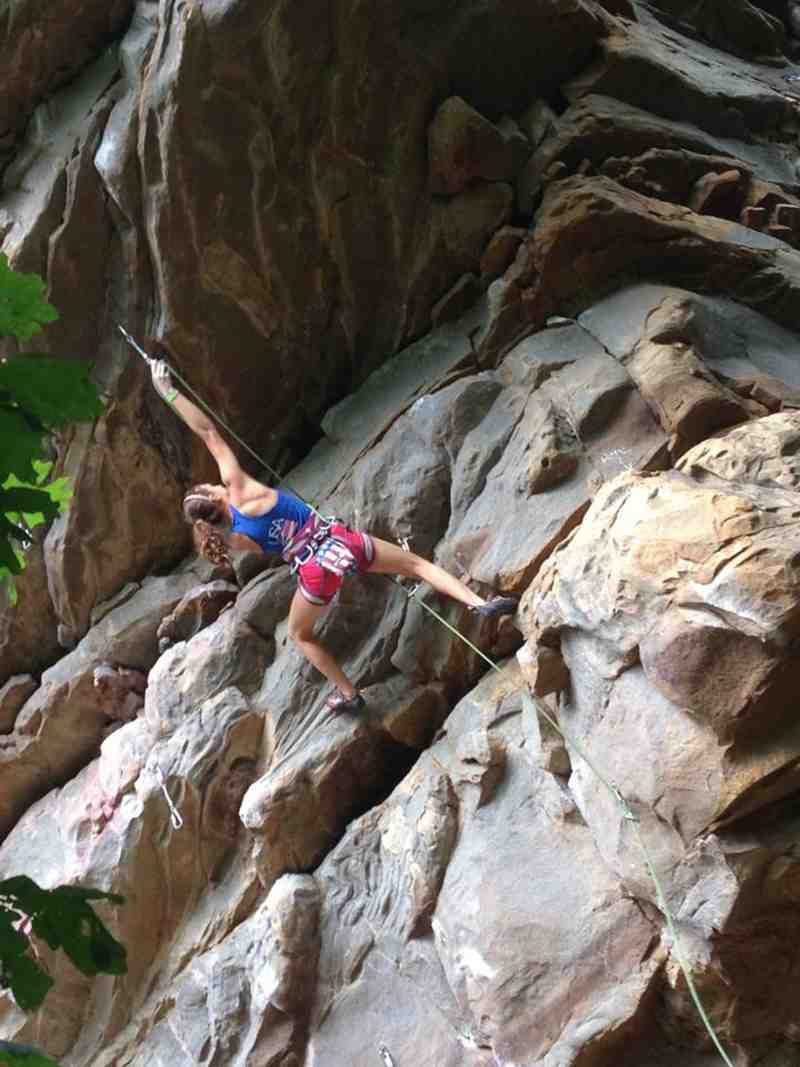
Tape is a common part of a climber's toolkit. Tape on fingers and covering areas prone to callouses can help protect skin from abrasions, support ligaments and digits during long periods of strain, and more.
Tapes used in climbing finger protection fall into a few categories:
- Classic Athletic Tape: Sometimes cotton (soft and easily conforming to digits); sometimes rayon (thicker and denser, for extra durability), classic athletic tape is a non-stretch adhesive tool that many climbers prefer. While it can limit motion somewhat, these tapes are tough, high-strength, and help keep skin together and almost splint strained digits. SHIELD PRECISION Tape meets this need in 1" and 1/2" types.
- Soft Stretch Sports Tape (Non-Kinesio): These tapes offer a sweet balance: compatible with chalk; stretch to allow range of motion; compression from stretch. to support joints and digits; movement and agility protected and not restricted. These tapes are more innovative in climbing, and a great example is SHIELD REFLEX Tape.
- Kinesiology Tape: These tapes are sometimes helpful for recovering from hyper-extension in wrists and thumbs, but be careful - most kinesiology tapes are not chalk-compatible, and they can present a slippery surface on fingers.
What are the most common misconceptions about finger strength training?
There are several prevalent myths in the climbing community that can inadvertently lead to injuries:
- Myth: More is Always Better: This is perhaps the most dangerous misconception. Constantly pushing for higher volume or intensity without adequate rest leads to overtraining and a high risk of overuse injuries. Our fingers need time to adapt and repair.
- Myth: You Must Train on Tiny Edges: While small holds demand more strength, not everyone's finger morphology is built to safely handle the extreme forces generated on 20mm or smaller edges. If you consistently experience finger pain after training on small edges, it might be more beneficial to train on larger edges (e.g., 30mm) that better suit your anatomy, as suggested by experts like Tyler Nelson. Personalized training is key.
- Myth: Finger Strength is All That Matters: While crucial, finger strength is just one component of climbing performance. Technique, body positioning, footwork, core tension, flexibility, and mental fortitude are equally, if not more, important. Strong fingers cannot compensate for poor technique or stiff hips. Focusing solely on finger strength can lead to imbalances and neglect other areas that contribute to injury prevention.
- Myth: You Need to Train Finger Strength Year-Round: Periodization is vital. Continuously training maximal finger strength can lead to chronic joint stress. Instead, cycle your training, focusing on strength in the off-season and shifting to maintenance, endurance, and power closer to your climbing season.
Conclusion
Our fingers are our most valuable asset as climbers, and taking a proactive approach to climbing finger injury prevention is paramount for a long, healthy, and high-performing climbing career. We've explored the intricate anatomy of our fingers, the specific risks associated with different grip types, and the importance of smart training.
Remember the pillars of prevention:
- Prioritize Proper Warm-ups and Cool-downs: Prepare your tissues for load and aid their recovery afterward.
- Accept Balanced Strengthening: Don't just train your flexors; strengthen your extensors and intrinsic hand muscles.
- Practice Smart Load Management and Periodization: Gradually progress your training and respect the need for adequate rest and recovery.
- Refine Your Technique: Use your body efficiently to reduce unnecessary strain on your fingers.
- When you need more support, consider trying out taping for fingers and wrists, either during activity or during recovery
Long-term finger health is an ongoing process, requiring consistent effort and a willingness to listen to your body. Here at SHIELD Health & Fitness, we understand the dedication it takes to climb hard and stay healthy. That's why we're committed to manufacturing professional-quality, American-made athletic tapes and protective tools, backed by years of expertise. Our products are trusted by pro teams because we focus on ethical, local production and quality you can rely on.
Take a proactive approach to your finger health. Invest in your body, train smart, and you'll stay on the wall, climbing pain-free for years to come. For robust support and protection, explore our range and Find the right rigid tape for your needs.
