

Beyond the Ball: Essential Hand Taping Tips for Volleyball Players
Why Athletic Tape Matters for Volleyball Performance

Athletic tape for volleyball players is more than the kinesiology tapes you see on the all stars at beach tournaments, or ankle and knee taping commonplace in the indoor court: taping is also a key tool to prevent and manage wear and trauma on fingers. Whether you're blocking at the net or setting with precision, the right tape can mean the difference between playing through a match and sitting on the sidelines.
Quick Answer: Best Athletic Tape Types for Volleyball Players
| Tape Type | Best For | Key Benefit |
|---|---|---|
| Rigid Zinc-Oxide Tape | Buddy taping, joint stabilization, wrist immobilization | Maximum support, limits movement |
| Elastic Athletic Tape | Prophylactic wrapping, blister prevention | Breathability with moderate support, and allows movement while compressing/supporting |
| Kinesiology Tape | Taping areas of hyper-extension or strain | Full range of motion, skin-like flexibility, but less suitable for fingers and digits |
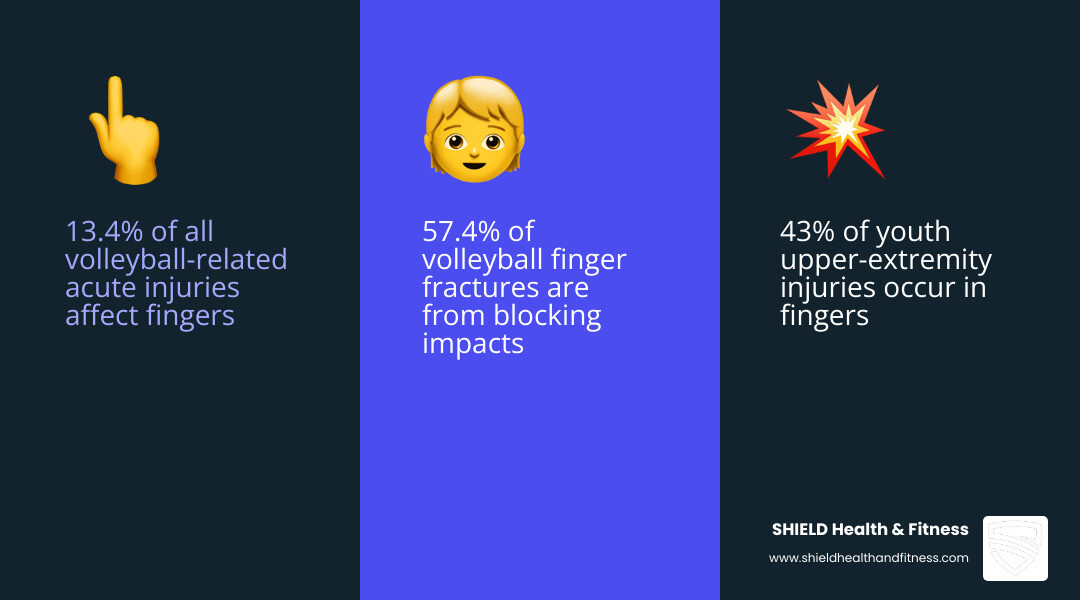
The numbers tell the story: finger injuries account for 13.4% of all volleyball-related acute injuries, making them the third-most common injury site after ankles and knees. Among youth players, 43% of upper-extremity injuries occur in the fingers, with sprains, strains, and fractures dominating the injury reports. When you're blocking a spike traveling 50+ mph or setting hundreds of times per practice, your fingers take a beating.
Tape isn't just about treating injuries after they happen. It's about strengthening vulnerable joints before impact, protecting skin from repetitive friction, and giving you the confidence to go all-in on every play. Middle blockers tape to prevent hyperextension during blocks. Setters tape to reduce friction burns from constant ball contact. Smart players tape prophylactically because they know prevention beats recovery every time.
I'm Josh Key, and with the team at SHIELD Health and Fitness. we have worked with Volleyball players - beach and indoor alike — to understand how tape can help players stay in the game and support confident play. I've seen how proper athletic tape for volleyball players transforms performance and resilience. This guide will walk you through everything you need to know about selecting and applying the right tape for your position and injury prevention needs.
Why Volleyball Players Tape Their Fingers: The Science of Support
To understand why we see so much white tape on and around the court, it helps to look at the biomechanics of the game. Volleyball is a sport of high-velocity impacts, yet one where subtle control and hand dexterity and feel are all still very important. When a middle blocker goes up to stop a spike, their fingers are often the only thing between a high-speed ball and the floor. This collision can easily force a finger backward (hyperextension) or sideways, leading to painful jams or ligament tears.
According to Scientific research on upper extremity volleyball trauma, upper extremity injuries (including the wrist, hand, and shoulder) comprise 20–30% of all volleyball injuries. Finger and thumb trauma—including sprains, dislocations, and fractures—are frequently linked to the high-impact nature of blocking and the technical demands of setting.
In a large-scale youth study (U.S., ages ≤18, 2012–2022), the data was even more startling: 43% of upper-extremity volleyball injuries were to the fingers. Of those, 42.6% were sprains or strains, while 19.5% were fractures. Most importantly, among all fractures recorded in the study, 57.4% occurred specifically in the fingers.
By using athletic tape for volleyball players, we provide an external "exoskeleton" for the joints. This tape serves several key scientific purposes:
- Joint Stability: Tape limits the range of motion of the interphalangeal joints, preventing them from bending in ways they shouldn't.
- Load Distribution: When a ball hits a taped finger, the tape helps distribute the force across a larger surface area and into the hand, rather than concentrating it on a single joint.
- Proprioception: Tape provides sensory feedback to the brain, making the player more aware of their finger position, which can inherently help prevent awkward contact.
- Skin Integrity: Constant contact with the ball and the floor can cause dry, cracking skin or "floor burns." Tape acts as a protective barrier.
- Compression: compression is a simple and common supportive function of tape - compression helps to keep alignment, maintain even surface contact, and provides some outer support from the impulse of impact.
Choosing the Right Athletic Tape for Volleyball Players
Not all tape is created equal. If you walk into a sports store in America, you'll see shelves of different colors and textures. One thing we can confirm: tape is not just tape! Different tapes have different stretch profiles, tackiness and stick, water repellency, and surface energy. These are subtle differences, but they matter.
Rigid Athletic Tape
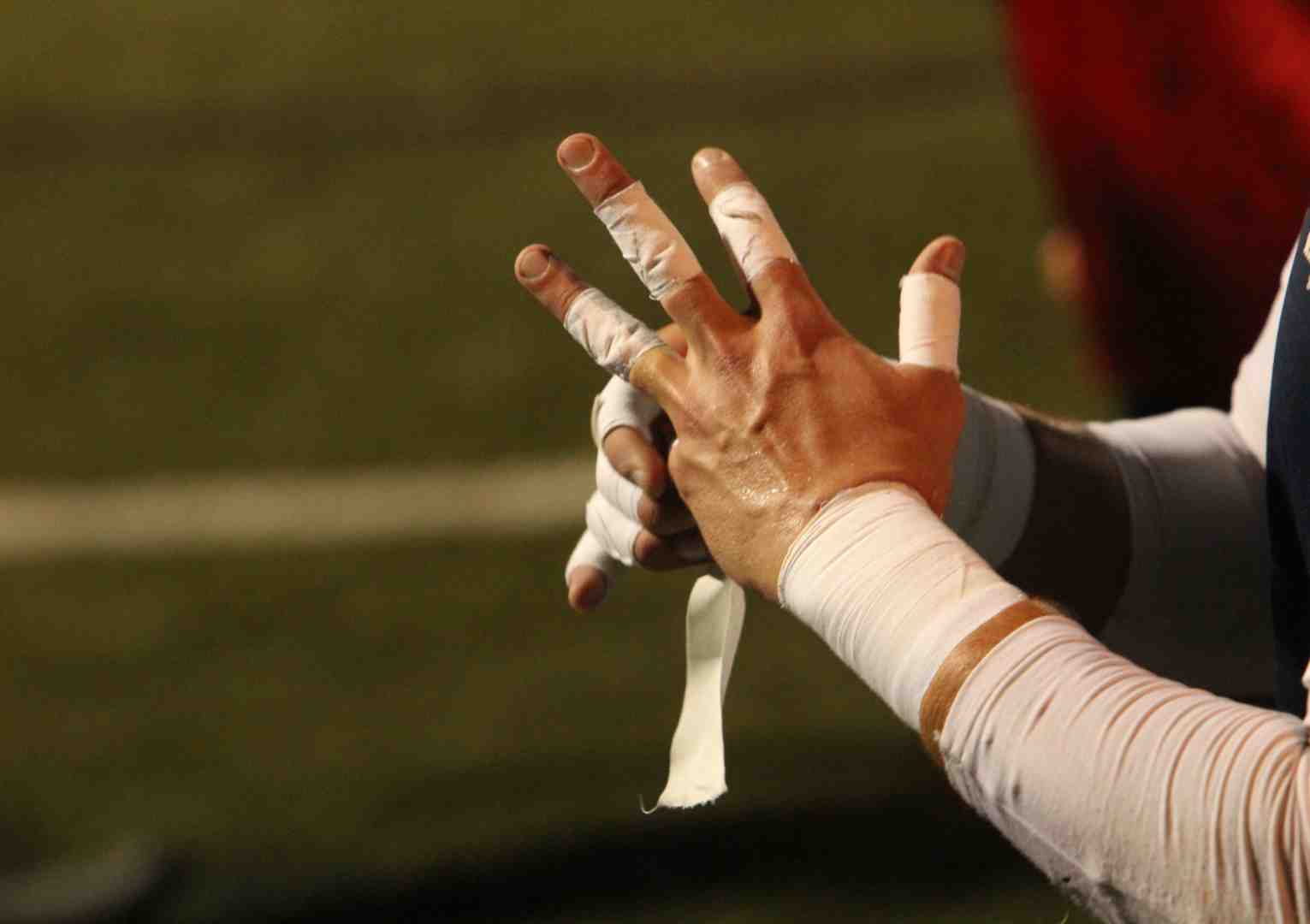
This is the "gold standard" for joint stabilization. Usually made of 100% cotton with a zinc-oxide adhesive, rigid tape has zero stretch. We recommend this for Athletic Tape for Hands when you need to "lock down" a joint. It is the best choice for buddy taping a jammed finger because it provides the structural integrity needed to keep the injured finger aligned with its healthy neighbor.
Kinesiology Tape (KT)
Unlike rigid tape, kinesiology tape is designed to mimic the elasticity of human skin. It is highly breathable and water-resistant. While it doesn't provide the same mechanical "block" as rigid tape, it is excellent for Sports Tape for Fingers when you need to maintain a full range of motion. It’s also great for reducing swelling and improving blood flow to a recovering injury.
Elastic Adhesive and Stretch Tapes
This is a hybrid option. It offers more support than kinesiology tape but more flexibility than rigid tape. It is often used as a "finishing" layer or for wrapping wrists where some movement is necessary for the snapping motion of a hit. SHIELD Reflex has been popular for its soft texture, easy-tear, compression and thin material for supporting fingers and wrists with compression, but still offering a great feel and hand control during play.
| Feature | Rigid Zinc-Oxide Tape | Stretch Tape |
|---|---|---|
| Elasticity | None (Static) | Moderate (2-way) |
| Primary Goal | Immobilization / Stability | Compression + Mobility |
| Breathability | Moderate | Moderate |
| Adhesive Strength | High | Moderate - High |
| Typical Uses | Buddy taping, sprains | Muscle, Wrist, finger support, setter finger taping |
At SHIELD Health & Fitness, we focus on Making outstanding narrow cotton tape - SHIELD Precision Tapes - because we know that when a volleyball player reaches for tape, they are usually looking for maximum security during high-intensity play. But players have come to us seeking REFLEX stretch tape as a different approach, using it to tape fingers to retain full mobility and finger sensitivity for play.
Position-Specific Needs for Athletic Tape for Volleyball Players
The way you tape should depend heavily on where you stand on the court. A setter’s needs are worlds apart from a middle blocker’s.
- Setters: Precision is everything. Setters often avoid heavy rigid tape because it can dull the "feel" of the ball. Instead, they often use thin strips of Shield Stretch Tape or kinesiology tape on their fingertips to prevent skin cracking and provide a slight grip advantage. If a setter has a thumb injury, they might use a "figure-eight" pattern to stabilize the base of the thumb while keeping the tip free.
- Blockers (Middles and Outsides): These players are at the highest risk for jammed fingers. They often use the "buddy taping" method on their middle and ring fingers or ring and pinky fingers. This provides lateral stability so that when a ball "wipes" off the block, the fingers don't splay apart.
- Libero/Defensive Specialists: These players spend a lot of time diving. Their taping needs often focus on the wrists and thumbs to prevent "carpet burn" and to support the wrist during hard-driven digs.
Safety and Maintenance of Athletic Tape for Volleyball Players
Taping isn't a "set it and forget it" situation. Proper maintenance ensures the tape helps rather than hinders your game.
- The Circulation Check (Blanch Test): After taping, always press down on your fingernail until it turns white. When you let go, the color should return to pink within two seconds. If it stays white longer, the tape is too tight and must be reapplied.
- Skin Preparation: Sweat is the enemy of adhesive. Before applying tape, wash and dry your hands. For the best results, use a Pre-Tape Spray to create a tacky surface that stays put even during a five-set marathon.
- Reapplication Frequency: You should replace your finger tape between matches, or even between sets if you are a heavy sweater. Once the adhesive gets wet, the tape can slide, which creates a "false sense of security" that leads to injury.
- Avoid Overwrapping: A common mistake is wrapping the tape too many times around the base of the finger. This can limit your ability to make a fist or properly contact the ball. Two to three revolutions are usually sufficient.
- Residue Cleaning: After the game, use a tape remover or simple soap and water to get rid of the "sticky" feeling. Leaving adhesive on the skin can lead to irritation or allergic reactions over time.
For a deep dive into specific patterns, you can check out the Latest guide on volleyball finger taping, which offers visual breakdowns of various wraps.
Proper Taping Techniques: From Buddy Taping to Joint Support
If you have a minor sprain or want to prevent one, knowing the right "knots and crosses" is vital.
The Buddy Taping Method
This is the most common technique for athletic tape for volleyball players. It essentially turns two fingers into one stronger unit.
- Step 1: Place a small piece of foam or gauze between the two fingers you are taping (usually the ring and middle finger). This prevents skin-on-skin friction and moisture buildup.
- Step 2: Using 0.5-inch or 1-inch Shield Signature Athletic Tape 3pk, wrap the fingers together at the base (between the knuckle and the first joint).
- Step 3: Wrap them again between the first and second joints.
- Crucial Tip: Never tape over the knuckles themselves. This allows the fingers to still bend and flex so you can play your game.
The "X" Pattern for Joint Support
If you have a single finger that feels "loose" or is recovering from a jam:
- Step 1: Place an anchor strip around the bone below the joint.
- Step 2: Create an "X" with two strips of tape across the joint on the palm side. This prevents the finger from being forced backward (hyperextension).
- Step 3: Place another anchor strip over the ends of the "X" to lock it in.
Beyond Fingers: Taping for Ankles and Wrists
While fingers are the focus of this guide, we can't ignore the rest of the body. Ankle injuries are actually the #1 acute injury in volleyball, accounting for nearly 32% of all incidents.
Ankle Taping
If you have a history of rolls, Ankle Taping for Soccer techniques are actually very similar to what we use on the volleyball court. The goal is to prevent the "inversion" (rolling inward) of the ankle. Using a combination of stirrups, figure-eights, and heel locks with rigid tape provides the stability needed for jumping and landing in the "danger zone" near the net. For more on this, see our guide on Ankle Taping Soccer.
Wrist Taping
Wrist stability is crucial for hitters. The repetitive "snapping" motion can lead to tendonitis. A simple wrap of Athletic Tape for Injuries around the wrist can provide the compression needed to manage pain and prevent hyperextension when blocking a heavy ball.
Frequently Asked Questions about Volleyball Taping
How often should I replace my finger tape during a match?
Ideally, you should check your tape every time you switch sides or between sets. If the edges are peeling or the tape feels "stretchy" (which rigid tape shouldn't), it’s time for a fresh wrap. Sweat and oils from your skin break down the adhesive quickly in a high-intensity environment.
Can I use kinesiology tape for a jammed finger?
While kinesiology tape is great for pain relief and swelling, it does not provide enough mechanical support to protect a truly jammed or sprained finger during play. For a jammed finger, you need the non-stretch properties of rigid zinc-oxide tape to prevent further injury. Use kinesiology tape during your "off" days to help with recovery.
Does taping my fingers affect my setting accuracy?
It can if you over-tape. The key is to keep the pads of your fingers (the "fingerprints") as clear as possible, as this is where your tactile "feel" for the ball comes from. Use thinner tape (0.5 inch) and avoid wrapping the very tips of the fingers unless you are specifically protecting a split fingernail.
Conclusion
At SHIELD Health & Fitness, we believe that every athlete deserves professional-grade protection. Our athletic tape for volleyball players is built on years of American-made expertise, trusted by pro teams and collegiate programs across the country. We take pride in our ethical, local production, ensuring that when you step onto the court, you're supported by the highest quality materials available.
Taping is more than just a pre-game ritual; it's a commitment to injury resilience and peak performance. By choosing the right tape and applying it with the techniques we've discussed, you can focus on what really matters: the next point. Whether you are looking for Shield Volleyball Store essentials or specific joint support, we are here to help you play longer and stronger.
Ready to gear up for your next match? Shop the SHIELD Volleyball Collection and experience the difference that professional-quality tape makes.
