

Grip it, Don't Rip It: Mastering and Protecting your Drum Stick Control
Mastering Your Drum Stick Grip To Play Longer And Stay In Control

Drummers are a special blend of athlete and musician. CREAM drummer Ginger Baker was a competitive Polo player; Metallica's Lars Ulrich, one of the defining voices of Thrash Metal drums, began in competitive Tennis; Even prog-metal icon Danny Carey was a serious basketball player prior to TOOL launching into the metal zeitgeist. All of these drummers, and all their peers, combine musicianship with a full-body athleticism unnlike any other instrumnet.
The drumsticks connect the player to their instrument, and drum stick grip is the foundation of all drumming technique. This defines your sound quality, control, speed, and ability to play without injury or fatigue. It's the seemingly simple act that separates beginners from pros—yet it's often the most overlooked skill.
The Two Main Drum Stick Grip Types
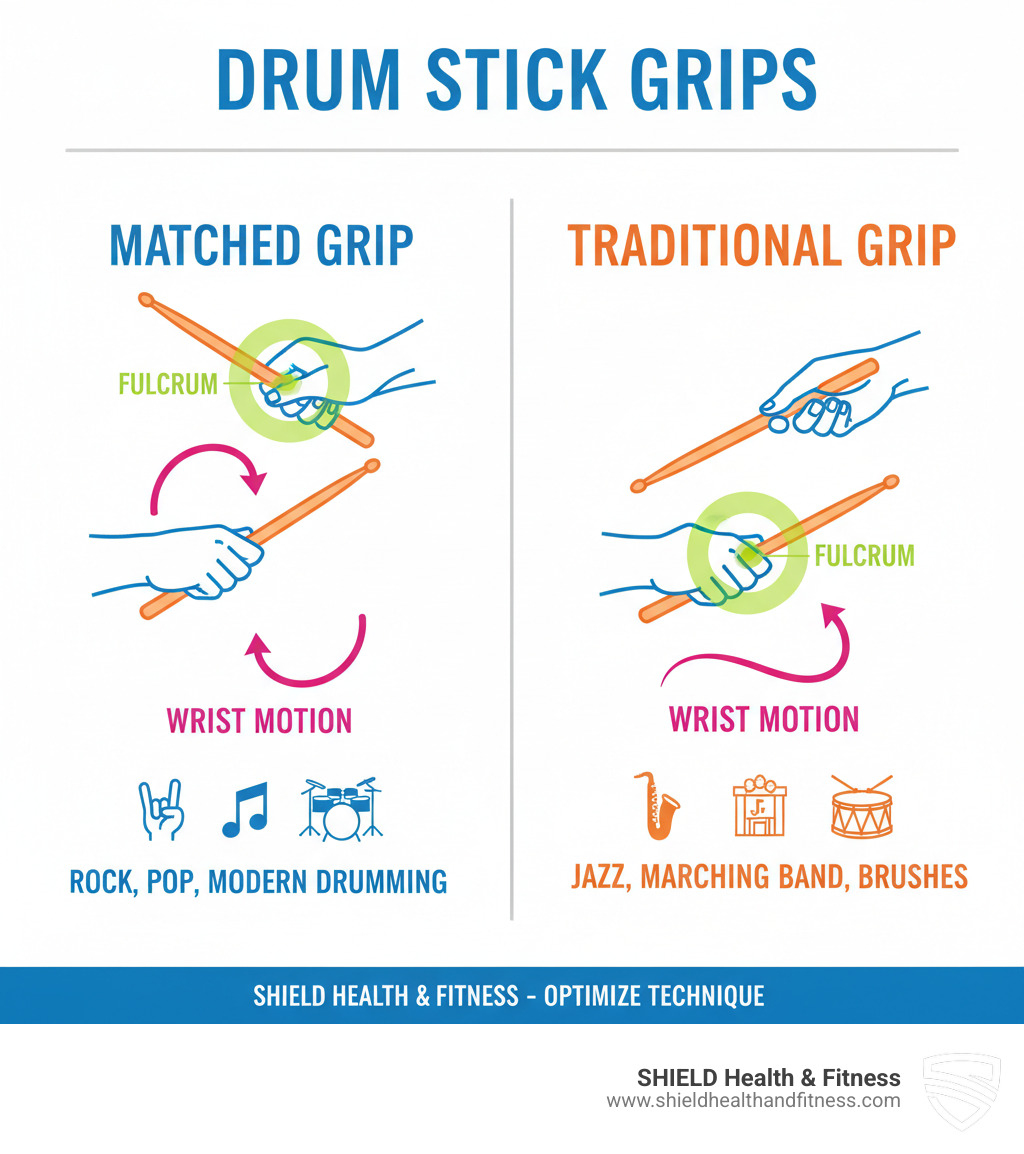
Matched Grip: Both hands hold sticks identically (palms down). Most common for rock, pop, and modern drumming. Easier for beginners.
- American Grip: Palms at 45° angle—versatile, all-purpose
- German Grip: Palms facing down—maximum power
- French Grip: Palms facing each other—precision and speed
Traditional Grip: Hands hold sticks differently (one underhand). Popular in jazz and marching bands. Allows unique finesse and brushwork.
Key Challenges of Playing, Regardless of Grip:
- Blisters
- Sweat
- Drum Sticks slipping out of hand
Without proper technique, you risk the "death grip"—squeezing sticks too tightly—which leads to tension, blisters, and limited control. These mistakes don't just hold back your playing—they can cause real injuries like tendonitis or carpal tunnel syndrome.
When a musician is pracitcing long hours, it can be a challenge to maintain grip perfection through the fatigue and perspiration. Several drum accessories companies - Vater, Remo, and so on - sell Tapes and Shells for drumsticks, to help make stick grip a more simple, subtle process with less fatigue for the player. At SHIELD HEALTH AND FITNESS, we worked with in-house musicians to develop a custom wrap for just this purpose, and it's now used by players in marching bands, music schools, and even by a metal master or two.
I'm Cal, an expert in musicanship and injury prevention at SHIELD Health & Fitness. I've worked with many musicians, including drummers, to optimize comfort and reduce the stress of maintaining grip during long practices and performances. I've seen how proper Drum stick grip and protective gear are crucial for success and longevity.
Why Your Grip is the Foundation of Great Drumming
Your Drum stick grip is your only physical connection to the instrument. In perfect balance and application of the right grip, drumming can feel effortless. But with fatigue and strain, you're fighting yourself on every beat. At SHIELD Health & Fitness, we know from decades of playing and working with musicians to support proper technique is everything. Here’s why your grip is so critical:
Sound quality is the first thing to improve. A tight grip chokes the stick, creating a flat, lifeless tone. A relaxed grip lets the stick vibrate freely, producing a rich sound and a wider dynamic range, from soft ghost notes to loud accents.
Speed and fluidity follow. The secret to speed isn't muscling through; it's using the stick's natural rebound. A proper grip lets physics do half the work, making rapid rolls achievable. Fighting the rebound with a tight grip makes drumming much harder.
Next comes control and precision. Speed without accuracy is just noise. Your grip provides the control to land each stroke with the intended force and location, which is the key to tight, professional grooves.
Most importantly, proper grip is about injury prevention. Drumming involves thousands of repetitive motions. An improper grip creates tension that travels from your hands up your arms, leading to discomfort and the potential for injuries like tendonitis and carpal tunnel syndrome that can sideline a player.
Finally, an efficient grip reduces fatigue and maximizes rebound and stick response. By finding the fulcrum (balance point) and using a relaxed hold, you let the stick practically play itself. Your job is to guide the natural rebound, which is the foundation of an effortless technique.
Your Drum stick grip isn't a minor detail; it's the foundation for a lifetime of better, healthier playing.
Tools to Help Your Grip Feel Like Second Nature
Whether it's Matched Grip and Traditional Grip, there are a number of tools to help drummers maintain their grip and gain better feel to add nuance and personality to their playing. Think of them as technologies to make the translation of a player's intention to their instrument less bottlenecked or restricted, rather than as unfair tools to make playing "easier" - because playing isn't about easy or hard, it's about communicating and connecting to listeners.
Creams, Balms and Coatings - these products are liquids, creams, and other coatings that a drummer can apply to their fingers or directly onto sticks. They can serve to either increase the tack of skin or wood to help the hand grip the stick more tightly. These products are often sold in tins or jars, and last a certain amount of time during play before being absorbed by the skin or rubbing off through friction.
Stick or Hand Accessories - this is the categories that includes tapes and wraps, including the new** SHIELD STICK GRIP TAPE. These accessories can range from high-friction duct tape (which we do not recommend), to plastic tapes and wraps.
These products allow a player to customize the thickness of their drumstick, even allowing a player to make some sections of the stick thicker and others thinner. For these products, the tactile feel of the tape is critical - it should be comfortable, easy to apply, and easy to remove.
At SHIELD Health & Fitness, we know that choosing a grip affects your sound, comfort, and injury risk. Understanding each style helps you make an informed decision.
| Characteristic | Coatings and Creams | Stick and Hand Accessories |
|---|---|---|
| Ease of Use | Easy to apply, although residue on clothes and gear can be a frustration. | Applied before practice, removed and replaced as needed . |
| Duration of Use | Low: may be absorbed into stick or into skin, or may rub off with use. | High: Tapes withstand days and weeks of regular use. |
| Advantages | Can apply as much or as little as desired. | Extreme durability; style from colors and prints; apply more or less to perfect your feel. |
| Other Considerations | Can expire, easily lost. Another item to carry in your kit bag. | Should be as easy to remove as it is to apply. |
Mastering the Feel of the Right Drum Stick Grip For You
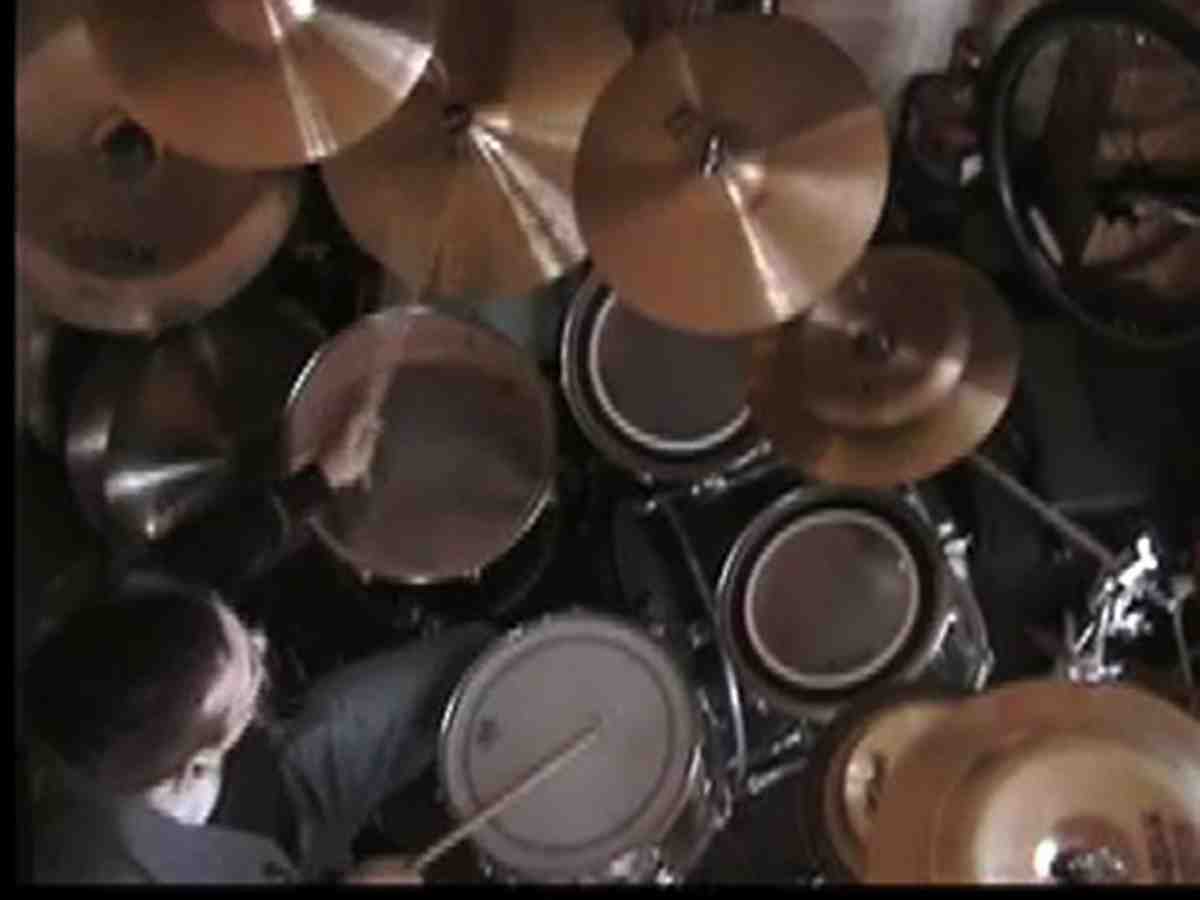
The core of any matched grip is the fulcrum point—the pivot created by your thumb and index finger. This allows the stick to rebound naturally. Your other fingers wrap loosely to guide the stick without choking its motion. To help with this, some players put grip support at the fulcrum point, ahead of it, or behind it, to better match their ergonomics, comfort and feel.
Grip Support at the fulcrum is the most common approach. Wether it's goop or tape, this precise point on the stick is where you need the most feel, subtle control, and confidence.
Behind the Fulcrum is common for players who want to apply a softer feel to their playing style. weighting the back, non-playing end of the stick, or using goop to increase grip there, can allow a player a more subtle feel a traditional grip. This can also make the playing end of the stick feel lighter and more delicate.
Ahead of the fulcrum - closer to the playing tip of the stick - this is a trick some players use to keep the stick balanced in a way that they like, and to represent a tactile cue to their hands to stay in the right balance point and not to let the stick slide away from the drum head surface.
A drummer using a grip aid may select their taping / wrapping / coating method based on play style, music genre, venue size, or ultimately - just the comfort as they play.
The Nuances of the Traditional Drum Stick Grip
Using a grip aid in drumming is a personal choice, and one that may be specific to the circumstances of play. Drumline outside on a hot summer day? Maybe a grip aid will help keep time without losing a stick. Smashing and crashing in a small dim-lit club? Wrapping sticks in different colors can help you switch between heavy, light sticks and brushes. Just like the rest of your kit and gear, these are tools for you to express yourself, in style and sound.
Getting a Grip - Some Habits to Avoid:
The "Death Grip": Squeezing the sticks too tightly is the most common mistake. It creates tension, restricts rebound, and causes fatigue and blisters. The Fix: Consciously relax your grip. Hold the stick with just enough pressure for control, letting the fulcrum do the work while your other fingers guide the stick loosely.
Incorrect Fulcrum Placement: Holding the stick too far back or forward kills rebound and control. The Fix: Find the stick's natural balance point—usually about a third of the way from the butt—where it bounces most freely with minimal effort.
Stiff Wrists and Arms: Locked wrists and rigid arms lead to a harsh sound and quick exhaustion. The Fix: Keep your wrists relaxed and practice smooth, fluid motions. Use a mirror to spot and eliminate unnecessary tension in your forearms or shoulders.
Lack of Finger Involvement: Many beginners use their whole hand instead of their fingers. The Fix: Involve your fingers. Holding the stick correctly allows your fingers to make micro-adjustments, adding the control and nuance that separates good drummers from great ones.
Ignoring the Rebound: Fighting the stick's natural bounce wastes energy and limits speed. The Fix: Work with the rebound. Allow the stick to bounce back after each stroke, using that momentum to power the next. This is fundamental to efficient, effortless drumming.
At SHIELD Health & Fitness, we may be best-known in the world of competitive athletics. But we have enough musicians in our team to know that fixing these habits for a drummer is just as important and beneficial to preventing repetitive stress as it would be for a pro athlete. Awareness is the first step to retraining your muscles to work smarter, not harder.
Finding Your Personal Grip & Preventing Injury
There's no single "perfect" Drum stick grip for everyone. Your hands and musical style are unique, so comfort is as important as textbook technique.
Finding what works for you starts with experimentation. Try American, German, and French grips to see what feels most natural for your hands and suits your musical goals—power for rock, finesse for jazz. Find the stick's balance point, or "sweet spot," where it rebounds most freely. This is where the stick does most of the work for you.
Once you have a preferred grip, use dedicated practice exercises to build good habits. Focus on grip awareness, use a metronome to build speed while staying relaxed, and try the "drop and catch" exercise to develop your fulcrum control.
Injury prevention isn't optional—it's essential. At SHIELD Health & Fitness, we've seen too many drummers sidelined by preventable injuries. Here’s how to protect yourself:
- Stay Relaxed: Tension is the enemy. Keep your wrists flexible and avoid clenching your jaw or tensing your shoulders.
- Warm-Up and Stretch: Before every session, spend five minutes gently stretching your hands, wrists, and forearms.
- Check Your Ergonomics: Adjust your drum kit so everything is at a comfortable height and angle, eliminating awkward reaching.
- Check for Tension: During practice, regularly scan your hands and arms. If you feel tension, take a breath, shake it out, and reset your grip.
Grip aids and hand protection can make a huge difference. Our SHIELD signature athletic tape 3pk provides professional-grade protection against hot spots and blisters. If you're developing blisters at the fulcrum point, a strategic application of athletic tape for hands provides a protective barrier without sacrificing feel. The techniques used in hand taping for rope climbs translate surprisingly well to drumming.
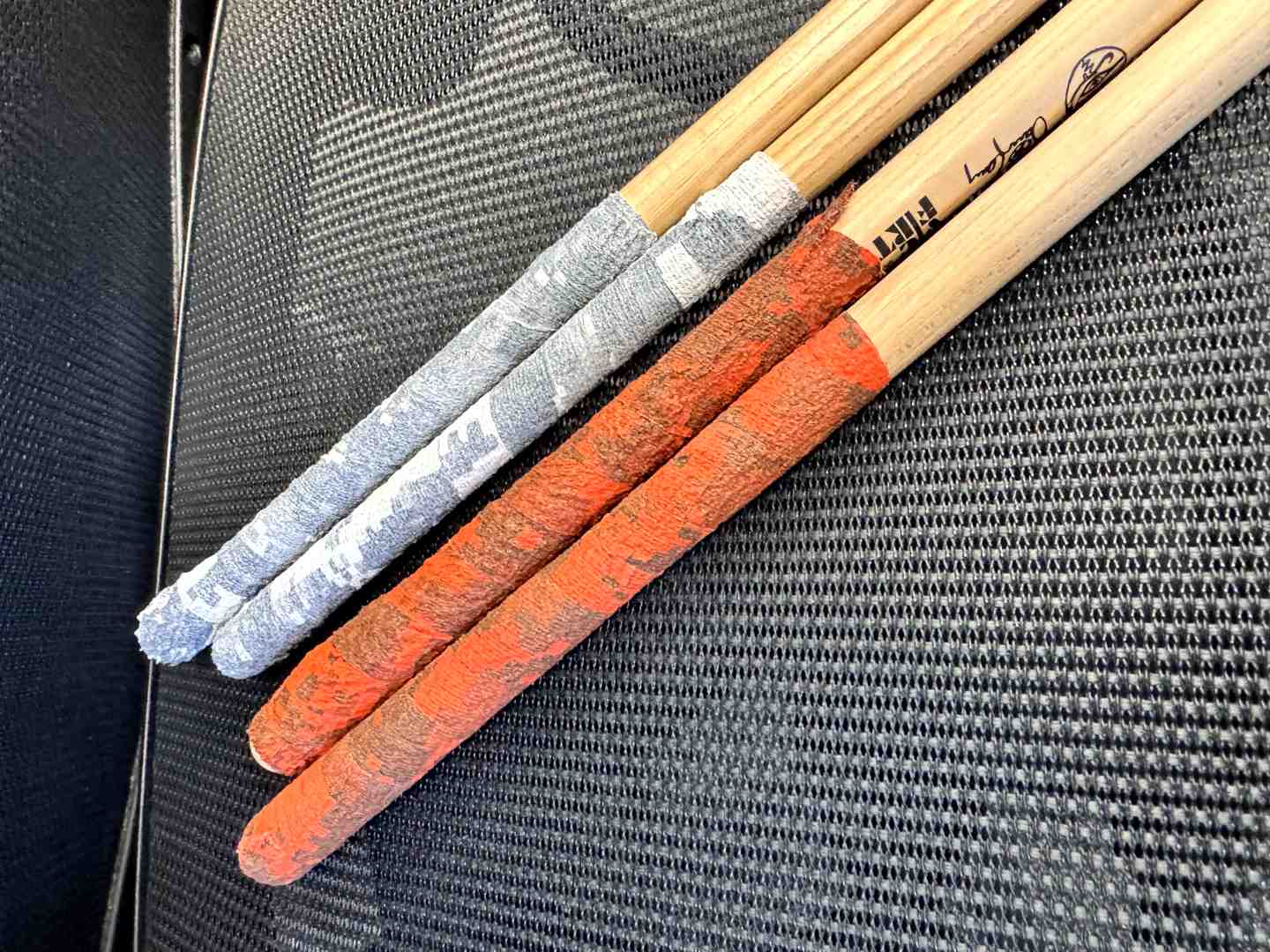
Even more than this traditional tape, we have developed a self-stick cohesive wrap for musicians to maintain their grip WITHOUT messing up their sticks or getting residue on their hands - this wrap tears easily, warms as you play, but never absorbs water and so it maintains is gentle tactile grip boost for a player just as much in hour one as it does in the third encore:
SHIELD STICK GRIP WRAP: Made in USA, available on Amazon and our own website
To apply our wrap, simply apply it by hand at a 45 degree angle, as far up the stick as you like. Keep it on as long as you like, and replace easily with no residue or glue left behind.
For drummers interested in diving deeper into the science behind grip mechanics, this scholarly research on percussion grip mechanics offers more insights.
Conclusion
Your journey with Drum stick grip doesn't end when you master the rudiments—it's a skill you'll refine throughout your entire drumming career. Whether you've chosen matched grip for its versatility or traditional grip for its unique touch, what matters most is that you understand the fundamentals and keep building on them, with technique to minimize strain and tension.
Proper grip isn't just about technique—it's about protecting your body while open uping your full potential behind the kit. The right grip gives you better sound quality, more dynamic control, faster playing, and the endurance to drum for hours without pain or fatigue. It's the difference between fighting your instrument and making music effortlessly.
Ready to take your performance to the next level? Explore our full range of athletic and protective gear designed to keep you playing stronger, longer, and pain-free. Your hands will thank you.
