

Guide To Women's Sports: Empowering Athletes, Growing Faster Than Ever
The Power of Sports in Girls' Lives

Sports for girls and Women's Sports are growing faster than ever. Women's sports offer life-changing benefits beyond the playing field. For young athletes, participation helps girls gain better physical health, stronger mental resilience, and improved social skills. They are more likely to stay in school, avoid risky behaviors, and develop lifelong leadership qualities. Research shows that 79% of Club alumni reported a positive impact on their physical well-being from sports programs.
This guide will help you find the right sport for your daughter, matching her personality and interests. We'll explore popular options, address safety, and show you how to help keep young female athletes engaged for a life of sport achievement!
I'm Josh Key, and through our team's work at SHIELD Health & Fitness, we've supported athletes across the country—from youth programs to elite competitors—in finding the right protective gear to keep them safe while exploring sports for girls and beyond. I've seen how the right support, both from equipment and community, transforms young athletes' experiences.
Why Sports Matter: The Lifelong Benefits for Girls
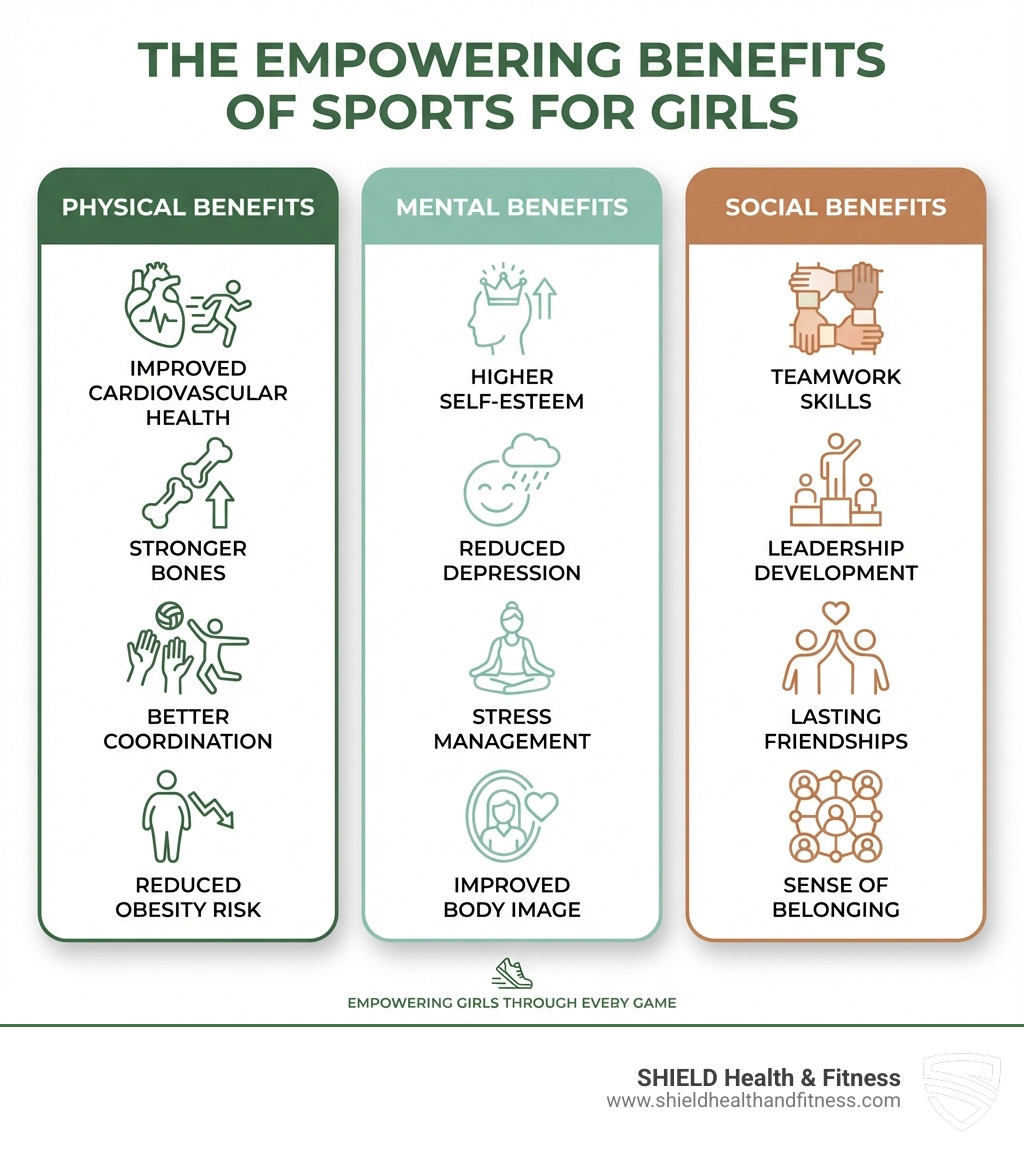
Regular physical activity is crucial for developing strong bones, maintaining a healthy weight, and improving cardiovascular health. For girls, this means a chance at establishing healthy fitness habits that can support a life of wellness. Sports lay a foundation for a healthy, active life.
The advantages of sports for girls extend beyond the physical, cultivating remarkable mental and emotional strength. Athletes in sports, whether boys or girls, learn resilience, perseverance, and how to cope with setbacks. For some, this translates into higher self-esteem and a positive body image. Sports are also a powerful tool for stress management and have been linked to lower levels of adolescent depression.
Socially, team sports teach cooperation, communication, and conflict resolution, fostering lasting friendships and a sense of belonging. Sports are also powerful crucibles for leadership, teaching girls to take initiative and make decisions under pressure. Research shows that female athletes are more likely to stay in school and avoid risky behaviors. The discipline and time management skills honed on the field can also improve academic performance. Investing in sports for girls means investing in well-rounded, confident, and successful young women.
Finding the Perfect Fit: A Guide to Popular Sports for Girls
Finding the "perfect fit" means considering a girl's interests, age, and goals. Here's a look at popular sports for girls across different categories.
Team Sports
Team sports are fantastic for developing social skills and a sense of belonging. There are dozens of options, but traditional team sports represent one of the most common places for young girl athletes to start their fitness journey.
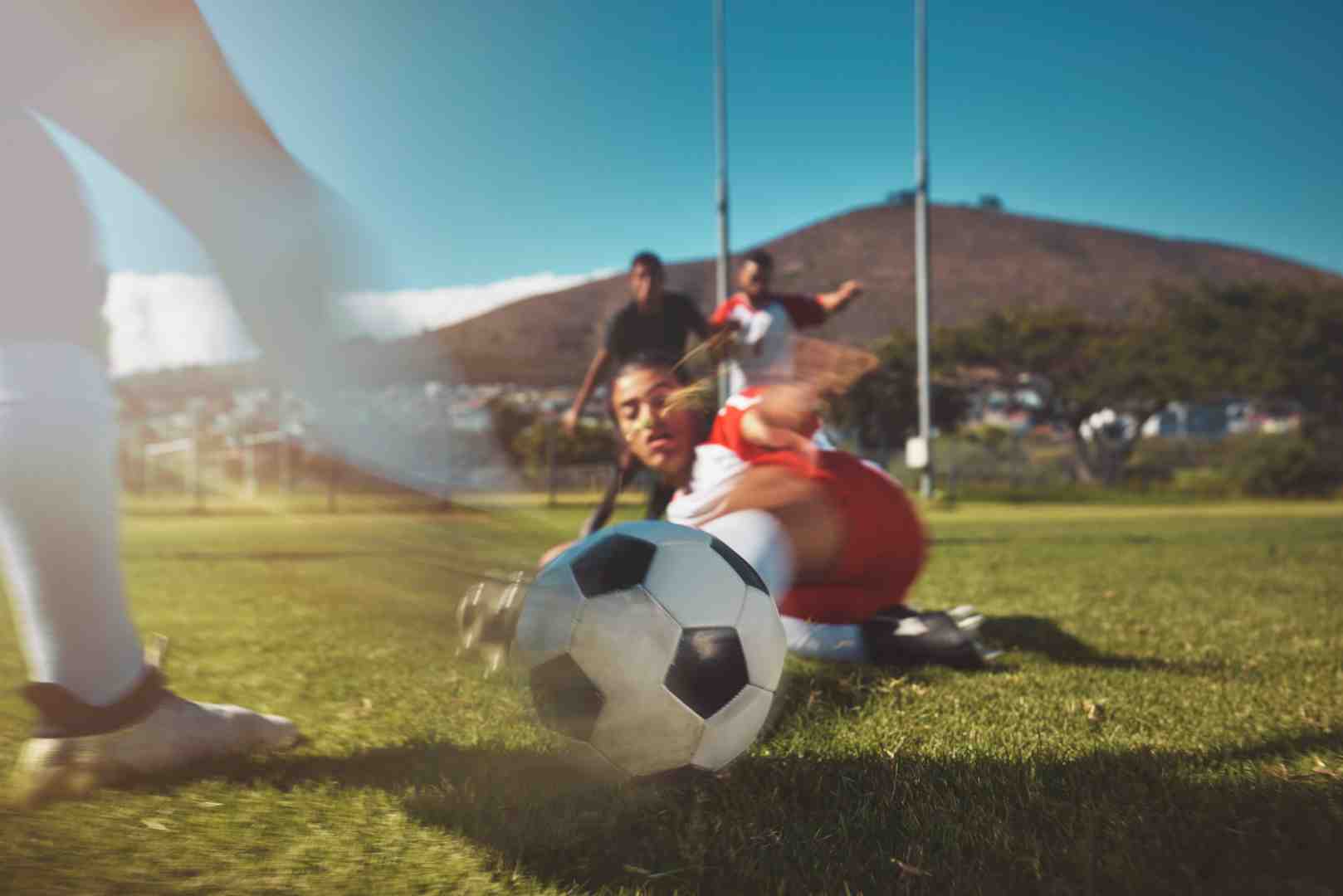
- Soccer: This popular and accessible game emphasizes endurance and strategy. Girls commonly start around age 5-6, but skills can be learned at almost any age.
- Basketball: A dynamic sport for coordination and speed. Basic skills can be learned at 3-4 years old, with teams forming by 5-6.
- Volleyball: A great choice for teamwork and quick reflexes, typically starting around 7-8 years old. It builds dynamic strength and agility.
- Softball: This classic team sport teaches hand-eye coordination, strategy, and patience in a supportive environment.
- Youth and Flag Football: This fast-growing coed and women's league sport teaches memorization, dynamic strength and agility, teamwork and more. Non-tackle divisions such as in flag football can be found to start around age 10.
While beneficial, be aware that sports like soccer and basketball, and football carry a higher risk for certain injuries, like ACL tears and concussions. Always consider the risks and demands on the body of any sport.
Individual Sports
Individual sports foster self-discipline, mental toughness, and personal achievement.
- Swimming: An incredible full-body workout that builds endurance and strength. It can be started from 3-4 years old, but instruction is often recommended after age 5.
- Tennis: Requiring agility and quick thinking, girls can start playing tennis as young as 5.
- Martial Arts: Karate, taekwondo, judo, Brazilian Jiu Jitsu, all teach discipline, respect, and self-defense while building athletic skill. Training can begin around 5-6 years old.
- Athletics (Track & Field): The most participated girls' sport, it includes running, jumping, and throwing, developing fundamental athletic skills.
- Softball: This classic team sport teaches hand-eye coordination, strategy, and patience in a supportive environment.
- Climbing: An individual sport mixing agility, creativity, strength and flexibility, climbing programs at gyms can start as young as 5-7 years old.
- Wrestling: A sport growing in popularity, wrestling is a unique blend of strength, stamina, and fast-thinking creativity.
- OLY Lifting: Olympic weightlifting (OLY) is an advanced strength sport requiring training, coaching, and often begins during teenage years. A challenging and rewarding practice.
- OCR / Obstacle / Ninja Racing: This ex.

Artistic & Rhythmic Sports
These sports combine athleticism with artistic expression, demanding discipline and coordination.
- Gymnastics: Starting as young as 3-4, gymnastics builds flexibility, strength, balance, and body control. Be mindful of potentially high-pressure environments.
- Figure Skating: A perfect option from age 4 and up, developing balance, strength, and artistry.
- Ballroom Dancing: Can be started at 3.5 years old to improve posture, rhythm, and coordination.
- Rock Climbing: For slightly older girls, this sport builds upper body strength and problem-solving skills.
Trying a variety of sports is often the best approach to finding one or two favorites. The key is to keep it fun and engaging.
How to Choose the Right Sport
Choosing the right sport is a personal journey. Prioritize your daughter's unique needs and preferences with these factors:
- Consider her age: Match the sport to her developmental stage. Basic motor skill activities like swimming are great for ages 3-4, while more complex sports like tennis (age 5+), martial arts (5-6+), and volleyball (7-8+) are better for older children. Age-appropriate activities prevent burnout.
- Match her personality: A good personality fit can boost enjoyment. Leader-like children may thrive in team sports like soccer. Sociable, energetic children might enjoy tennis or team sports. Calm, steady children may prefer swimming or figure skating. Sensitive, reflective children might like gymnastics or martial arts.
- Health considerations: Always consult a doctor first, especially with existing health conditions. For example, bad eyesight can be a factor in tennis, musculoskeletal issues in gymnastics, and skin conditions in swimming. Also be mindful of the Female Athlete Triad (disordered eating, menstrual dysfunction, and low bone density).
- The importance of fun: This is the most critical factor. Girls quit sports when they stop being fun. Ensure the activity is enjoyable, not a chore.
- Trying multiple sports: Encourage her to try a range of activities to find what she truly loves. This develops a broader skillset and prevents burnout from early specialization.
By considering these factors, you can help your daughter find a sport that supports her holistic development.
The Evolving World of Women's Sports
The journey of women in sports is one of historical exclusion and powerful triumphs. Participation evolved from informal recreation before 1870 to a more competitive arena. Historically, opportunities were limited—married women were even barred from watching the ancient Olympics. By the 19th century, however, female involvement in sports like tennis and cycling grew.
A pivotal moment for sports for girls in the U.S. was the passing of Title IX in 1972, which ensures equal opportunity in educational programs, including sports. Title IX profoundly reshaped the landscape, opening doors for countless girls. This fueled the rise of professional leagues like the WNBA and NWSL. While early leagues sometimes struggled, the appetite for women's pro sports is now undeniable, with record-breaking attendance like the 92,003 spectators at a 2023 women's volleyball match in Nebraska.
Despite progress, challenges remain.
- Pay Gap Disparity: A glaring pay gap persists. In 2021, the maximum WNBA salary was $221,450, compared to the NBA's $38,199,000. This disparity is common across many sports.
- Media Coverage Inequality: Women's sports have historically received less media coverage, which impacts sponsorship and public interest.
- Growing Viewership and Opportunities: On a positive note, viewership is growing. The 2015 FIFA Women's World Cup Final was the most-watched soccer game in U.S. history. Social media helps athletes connect directly with fans, and organizations like Sports 4 Life are funding new opportunities for girls.
Sports Created For and By Women
While many sports are variants of men's games, some were created for or popularized by women.
- Ringette: Created in Canada in 1963 exclusively for females.
- Netball: First played in England in 1895, this team sport is similar to basketball.
- Synchronized Swimming (Artistic Swimming): Originating in 1891, it combines swimming, dance, and gymnastics.
Other sports with significant female development include Stoolball, Tumbling, and Throwball. You can explore A brief history of sports created by women to learn more. These sports highlight the long-standing ingenuity of female athletes.
Playing It Safe: Injury Prevention and Positive Coaching
While the benefits of sports for girls are clear, ensuring a safe, positive experience is paramount. As a company dedicated to athletic health, we prioritize injury prevention and supportive environments.
Key Injury Risks in Popular Sports for Girls
Understanding gender-specific injury patterns is important for prevention, and as a consideration of any new athlete taking up a dedicated practice in a sport.
- ACL Tears: Female athletes have a significantly higher rate of ACL tears (up to four times that of males), especially in sports like soccer and basketball. This is due to anatomical, hormonal, and biomechanical factors.
- Concussion Risk: Some data suggests that girls suffer concussions at a higher rate than boys and may recover more slowly. For more details, read Why sports concussions can be worse for women.
Creating a Supportive Environment
A positive experience hinges on the right environment.
- Positive Coaching: Negative coaching causes girls to drop out more than boys. Coaches should build confidence, foster teamwork, and make practice fun.
- Proper Nutrition and Rest: Adequate nutrition and rest are vital for energy, recovery, and preventing conditions like the Female Athlete Triad.
- Mental Health Awareness: Be attuned to the mental well-being of athletes. The pressure to perform and body image concerns can impact mental health.
- Empowering Organizations: Many organizations empower girls through sports. Sports 4 Life funds opportunities in underserved communities. Boys & Girls Clubs of America offers programs that build physical and interpersonal skills. Girls4Sports, a youth-led organization, fights gender inequality through camps and advocacy, with its founder earning the Maegha Ramanathan wins ESPY Award. These groups show the impact of dedicated support on girls' lives.
Frequently Asked Questions about Sports for Girls
Here are answers to common questions about sports for girls.
At what age should my daughter start playing sports?
The ideal starting age varies. Basic motor skills can be developed from 3-5 years old in activities like swimming or gymnastics, focusing on fun and exploration. More structured sports can start at different ages:
- 3-4 years: Ballroom Dancing, Rhythmic Gymnastics, basic Basketball/Swimming
- 4+ years: Figure Skating
- 5-6 years: Tennis, Martial Arts
- 7-8 years: Volleyball, Skiing
- 9-10 years: Soccer, Horseback Riding
The key is to foster a love for activity without pushing competition too early. Any athlete can find fulfillment and rewards from any sport at any age. Do not let the "typical" age define your goals or passion for sport!
How do I keep my daughter from quitting sports?
To combat the high dropout rate for girls, focus on these strategies:
- Focus on Fun: The number one reason girls play is for fun. Keep it enjoyable.
- Celebrate Effort Over Winning: Acknowledge hard work and improvement to build resilience.
- Ensure a Positive Environment: This includes supportive coaches, teammates, and parents.
- Empower Her Voice: Involve her in choosing the sport and listen to her feedback.
- Provide Role Models: Exposure to successful female athletes is inspiring.
- Address Comfort and Safety: Ensure she has proper gear and feels physically safe.
Are contact sports safe for girls?
With proper precautions, girls can safely participate in contact sports. Interest is growing in football, wrestling, and boxing. Safety depends on:
- Proper Coaching: Coaches must be trained in appropriate techniques and injury prevention.
- Equipment: Correctly fitted protective gear is paramount.
- Rules: Adherence to safety rules is crucial.
- Individual Readiness: Assess a girl's physical and emotional readiness.
While girls are at higher risk for injuries like concussions and ACL tears, this calls for diligent prevention strategies, not outright avoidance. Research the sport, talk to coaches, and use high-quality protective gear to make an informed decision.
Conclusion
The journey into sports for girls is a powerful one, filled with opportunities for growth, learning, and self-findy. We've explored the immense benefits, from physical health and mental resilience to leadership skills and lasting friendships. We've also steerd the exciting landscape of popular sports and provided guidance on how to choose the right fit for your daughter, considering her age, personality, and health.
The world of women's sports continues to evolve, breaking barriers and achieving new triumphs, even as challenges like the pay gap and media visibility persist. And as we empower girls to play, we also emphasize the critical importance of safety, injury prevention, and fostering positive, supportive environments.
The goal isn't just about winning or reaching professional heights; it's about the invaluable life lessons learned, the confidence gained, and the joy of movement. We encourage you to help your daughter find a sport she loves, one that ignites her passion and keeps her engaged. The journey itself, the effort, the teamwork, and the personal growth—these are the true victories.
At SHIELD Health & Fitness, we're proud to support every athlete's journey. With our American-made, professional-quality athletic tapes and protective tools, trusted by pro teams for over 35 years, we are committed to helping athletes stay safe and perform their best.
Explore our protective gear to keep her safe in the game
